Project Overview:
This project is an IoT control assistant based on the ESP32-WROOM-32-N4 module, the Qiying Tailun CI-C22GS02S offline voice module, the Hummingbird 433 RF transceiver module, and an infrared remote control transceiver circuit. It can control home appliances in multiple ways.
Function Introduction
: 1. Air Conditioner Control
: Principle: Transmits infrared remote control signals. Control
methods: Voice control, mobile APP control.
Control functions: Turn on/off, cooling, heating, dehumidification, temperature adjustment, etc.
2. Floor Fan Control
: Principle: Transmits infrared remote control signals . Control methods
: Voice control, mobile APP control.
Control functions: Turn on/off, oscillation, timer, speed adjustment, etc.
3. Switch and Light Control
: Principle: Transmits 433 RF signals.
Control methods: Voice control, mobile APP control.
Control functions: Turn on/off, light on, light off.
4. Onboard Night Light Control
: Principle: The microcontroller's I/O port controls the MOSFET to output 5V power.
Control methods: Voice control, mobile APP control.
Control functions: Turn on night light, turn off night light, brighten slightly, dim slightly.
5. Control Principle of Onboard RGB Lights
: The microcontroller outputs WS2812 control signals via its I/O port. Control
methods: Voice control, mobile APP control.
Control content: Turn on lights, turn off lights, switch modes, next mode, previous mode.
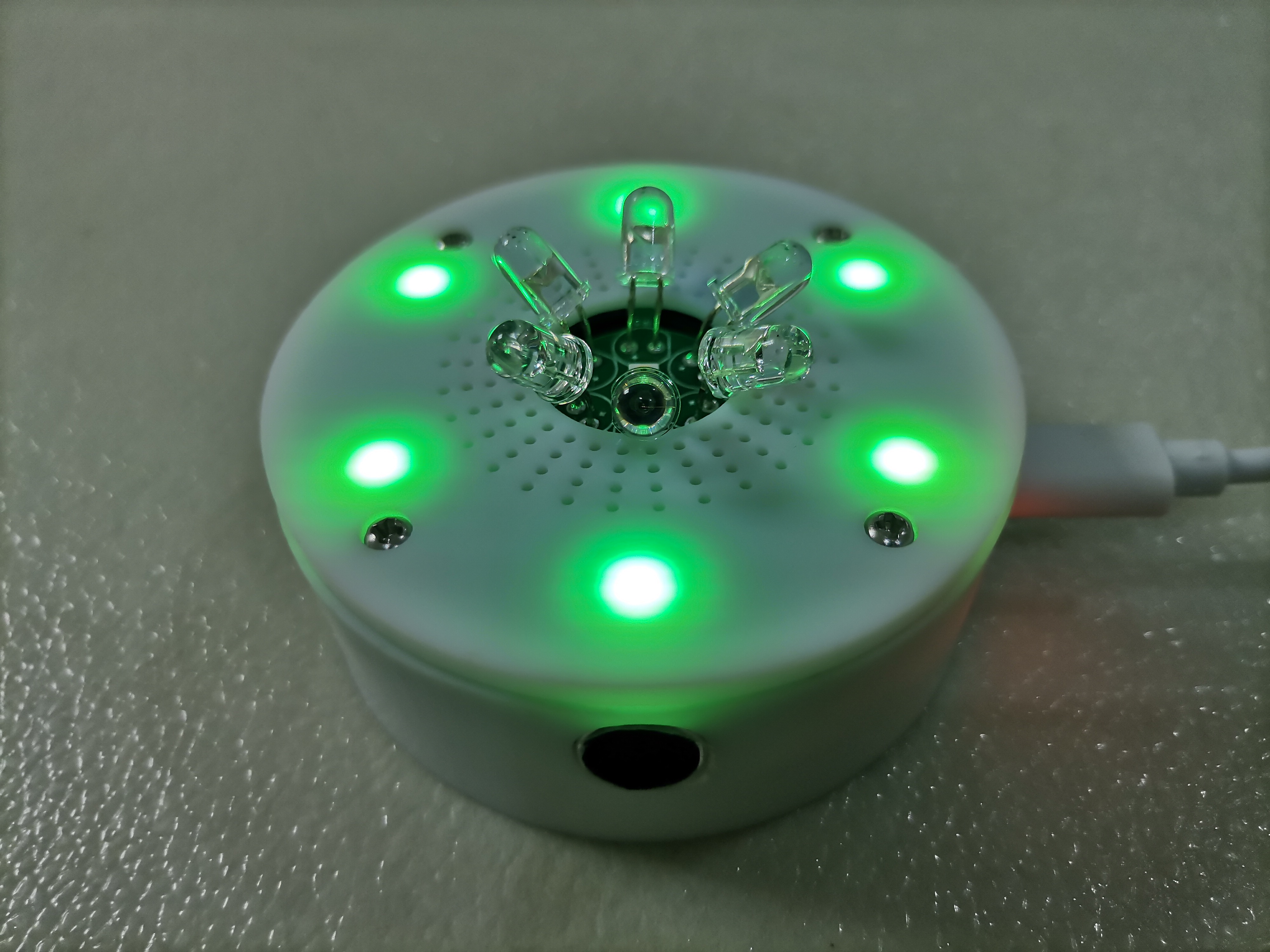
Other functions: The RGB lights turn on when the voice module is woken up, and turn off when the voice module goes to sleep.
6. Harness and Humidity Data Acquisition
Principle: The microcontroller communicates with the SHT30 temperature and humidity sensor via I2C to obtain real-time temperature and humidity data . Data
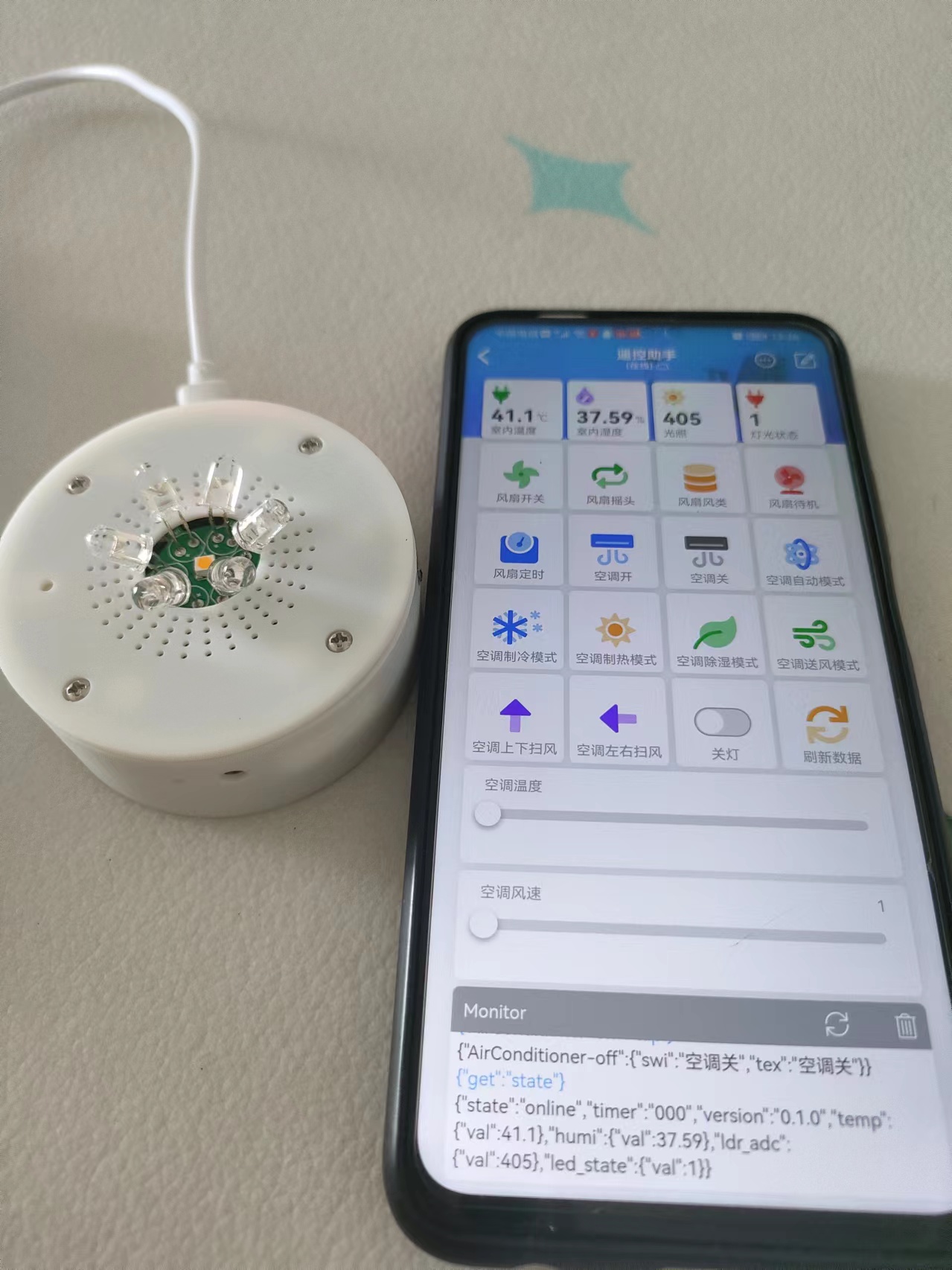
display method: Mobile APP display.
Other functions: Voice broadcast of temperature and humidity (this function is not yet implemented).
7. Harness and Light Data Acquisition
Principle: The microcontroller acquires light ADC data via a photoresistor ADC. Data
display method: Mobile APP display.
Other functions: An external HLK-LD2410B human presence radar module, combined with light ADC data, is used to control the night light (turn off the night light when someone is present and the light is strong; turn on the night light when someone is present and the light is dim). This function is not yet implemented.
Hardware Description:
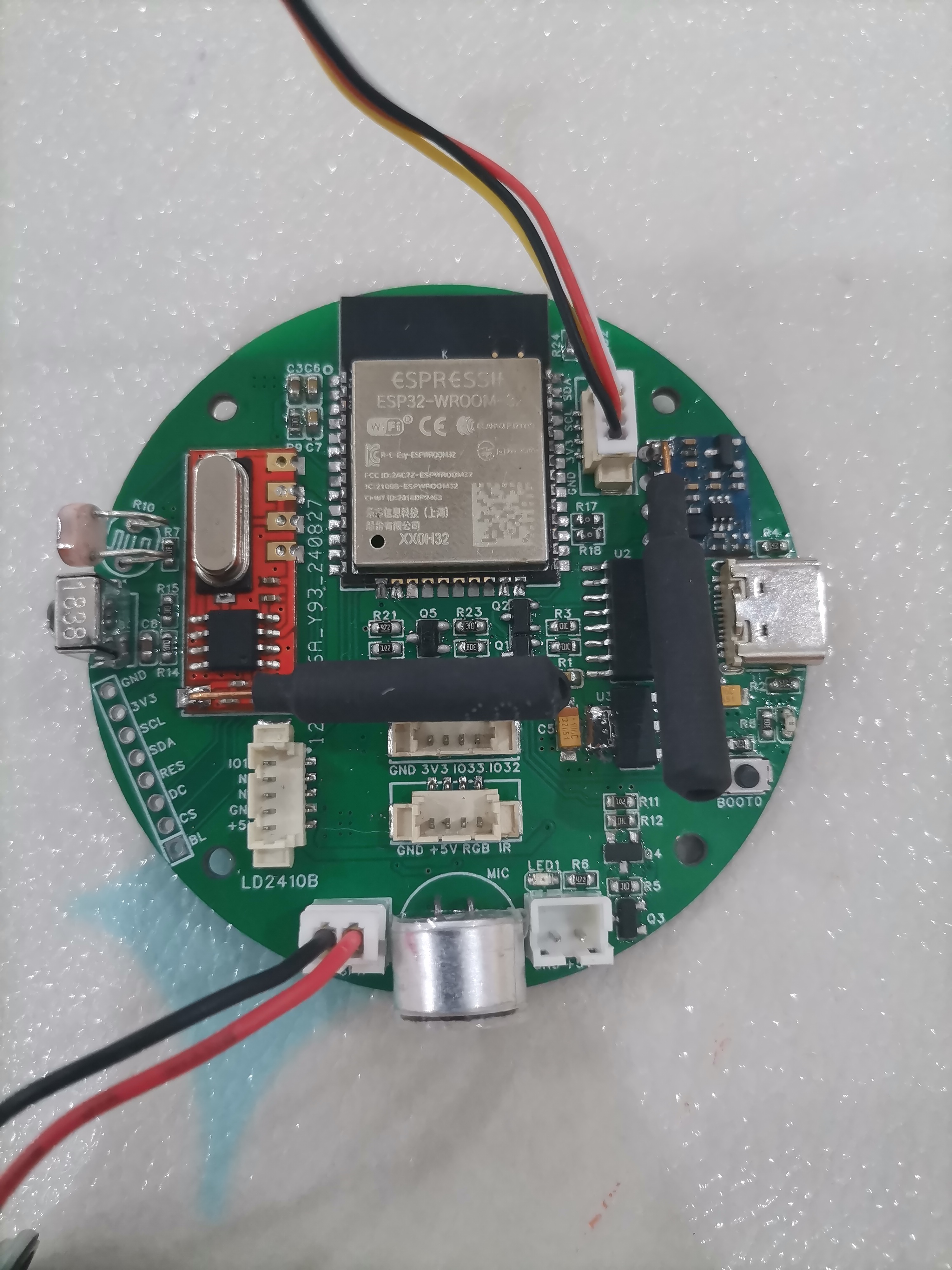
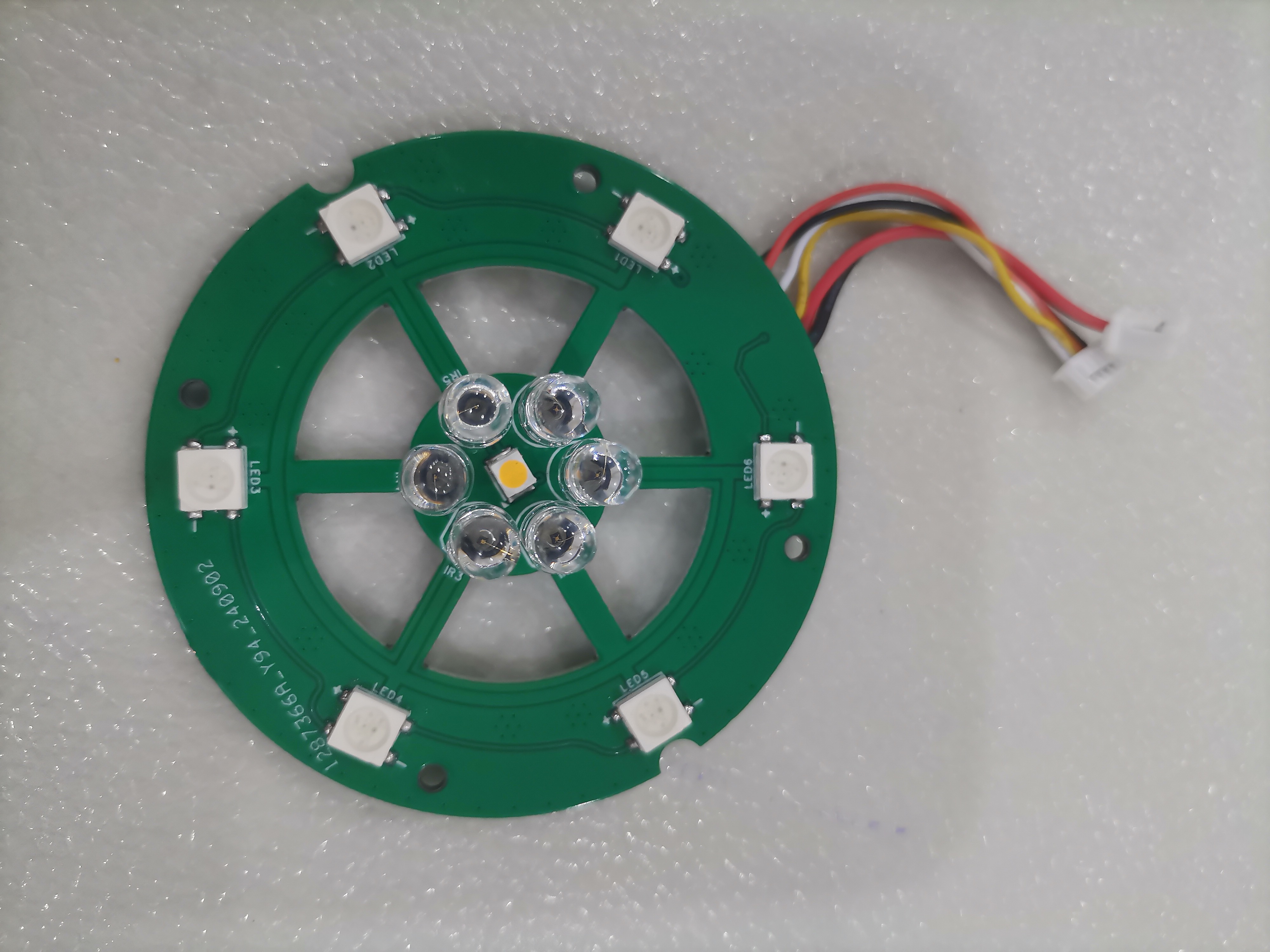
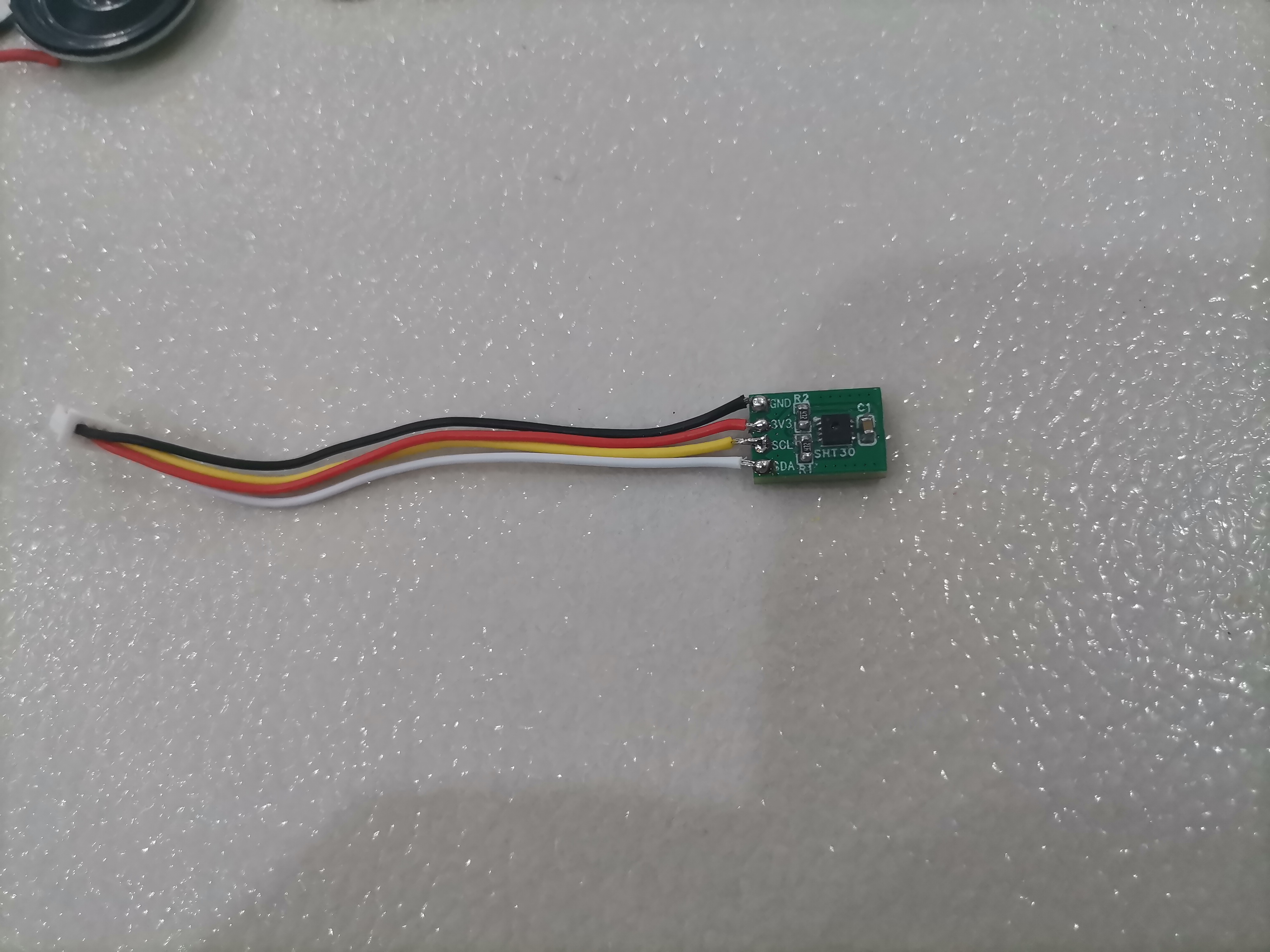
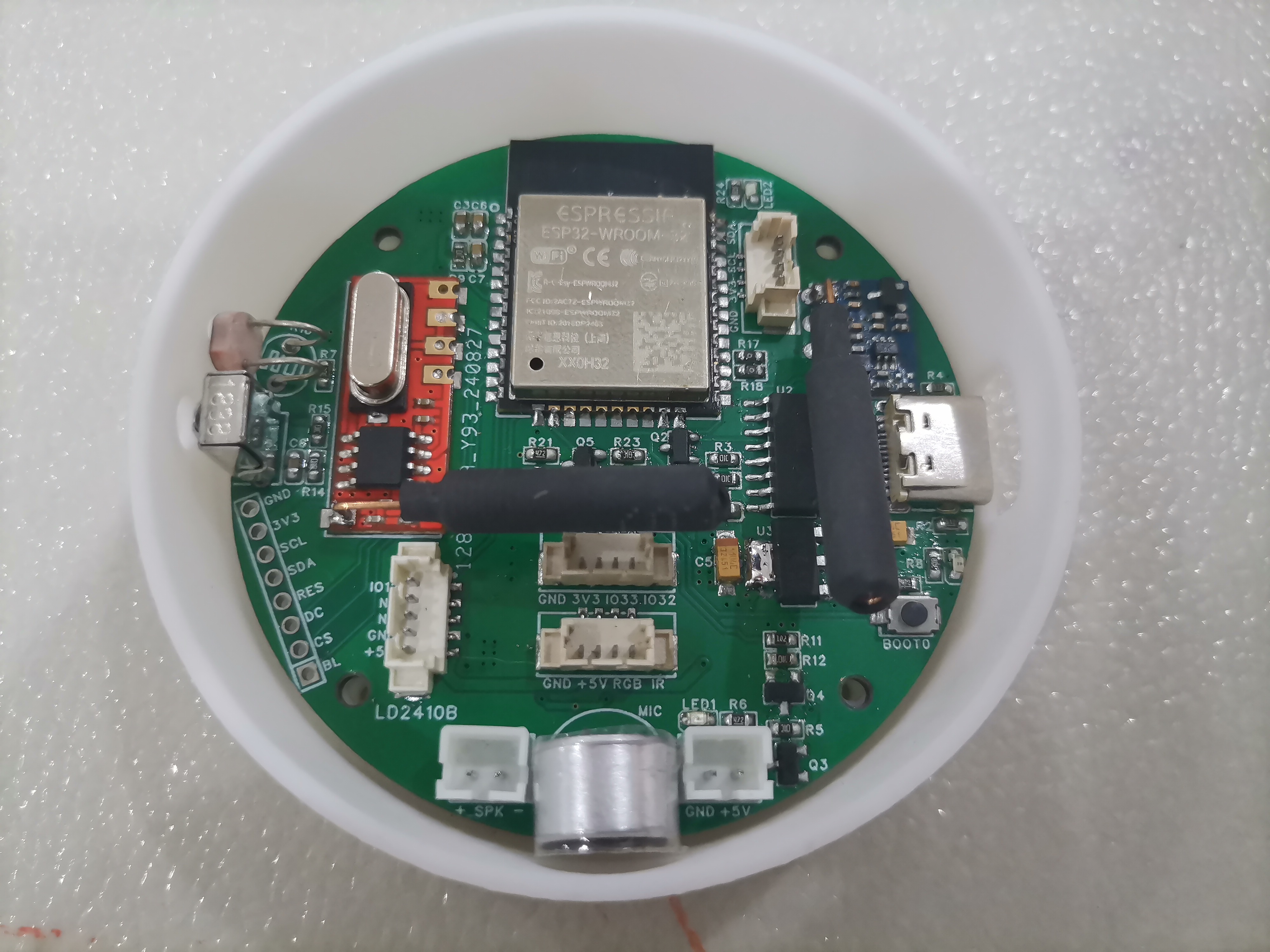
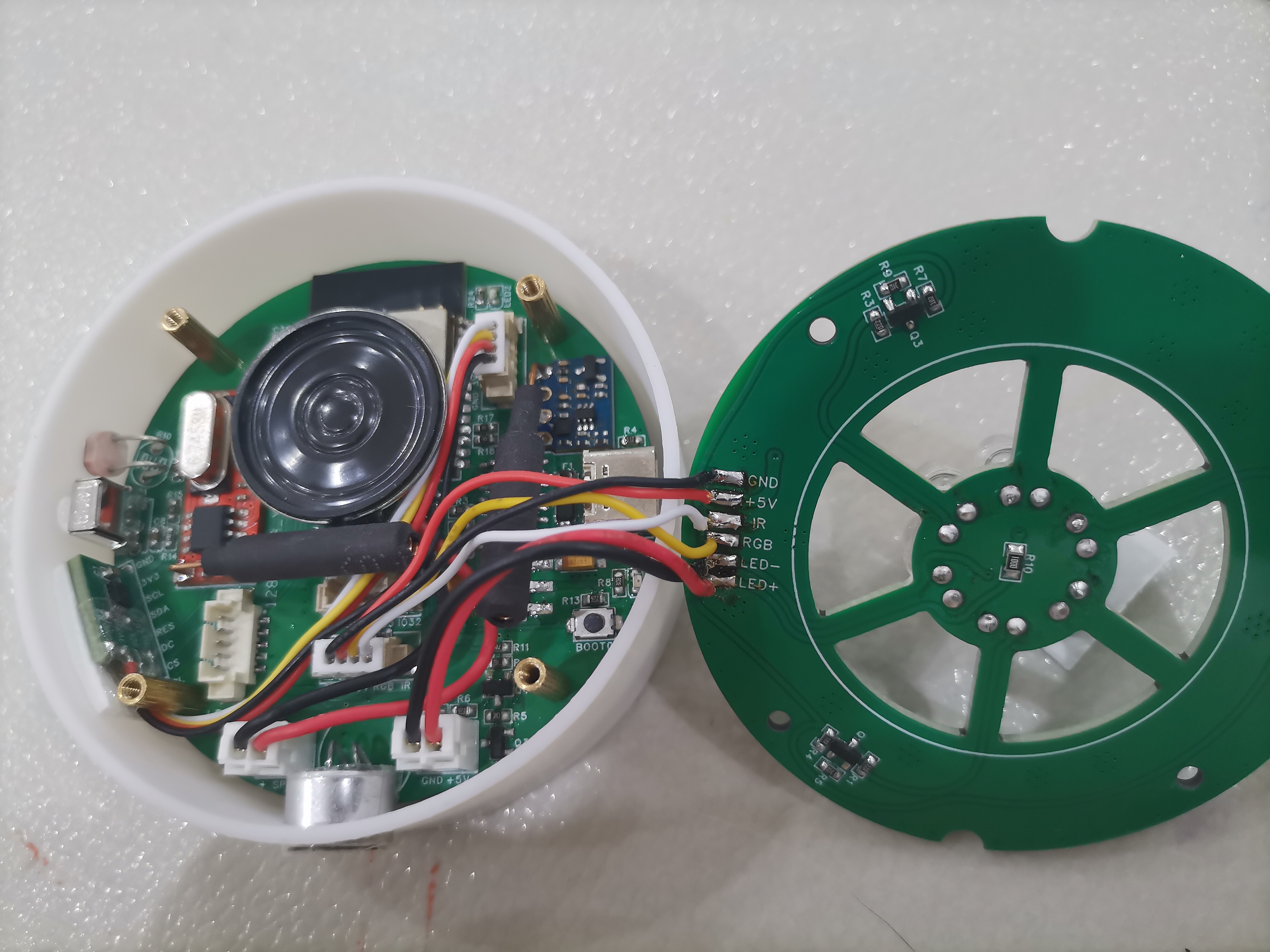
The circuit consists of three parts: the main control board, the light board, and the temperature and humidity sensor board.
Main Control Board:
Main Controller: ESP32-WROOM-32-N4 module.
Automatic Download Circuit: Composed of one USB-to-serial chip CH340C, two NPN transistors S8050, and several resistors and capacitors.
Offline Voice Circuit: One Qiying Tailun CI-C22GS02S offline voice module, one 9.7mm omnidirectional EVIL microphone, and one 8-ohm 0.5-watt speaker.
RF Transmitter Module: Hummingbird-Yuan T2L-433.
RF Receiver Module: Hummingbird-Yuan R1-433.
Infrared Remote Control Receiver Circuit: One infrared remote control receiver.
Illumination ADC Acquisition Circuit: A voltage divider circuit composed of one photoresistor and ordinary high-precision thick-film resistors.
Night Light Driver Circuit (5V Output): A 5V output control circuit composed of one NPN transistor SS8050, one P-channel MOSFET AO3401, and resistors.
RGB LED signal level conversion circuit (3.3V to 5V): Composed of one NPN transistor S8050 and four resistors.
Power supply: Direct power supply (5V) via Type-C interface, including the offline voice circuit, RF transceiver module, night light driver circuit, and infrared transmitter circuit. The 5V from the Type-C interface is stepped down to 3.3V via an AMS1117-3.3 to power the main controller and SHT30 temperature and humidity sensor.
Note: It is recommended to remove the DSS34 diode in the power supply section, as the diode's voltage drop will cause the input voltage to the AMS1117 to be too low. When the voice module emits sound, the circuit voltage will drop, causing the main controller voltage to also drop, resulting in a restart.
Light board: RGB LEDs: 6 WS2812 LEDs.
Infrared remote control transmitter circuit: 6 5mm diameter through-hole infrared LEDs.
Night light: 1 3528 warm white LED.
Temperature and humidity sensor board:
Utilizing a Sensirion SHT30-DIS-B2.5KS digital temperature and humidity sensor, connected to the main control board via wires. This is primarily to prevent the main control board's heat from affecting the ambient temperature collected by the sensor.
Software Description:
1. The main control program is written using the Arduino IDE, interacting with a mobile app via LED IoT.
2. The voice module firmware is directly generated on the Qiying Tailun Voice AI platform; see the official documentation for specific burning instructions. Originally, the wake word was planned to be "Remote Assistant," but at my child's suggestion, it was changed to "Hello Kaka" (my cat's name is Kaka). [
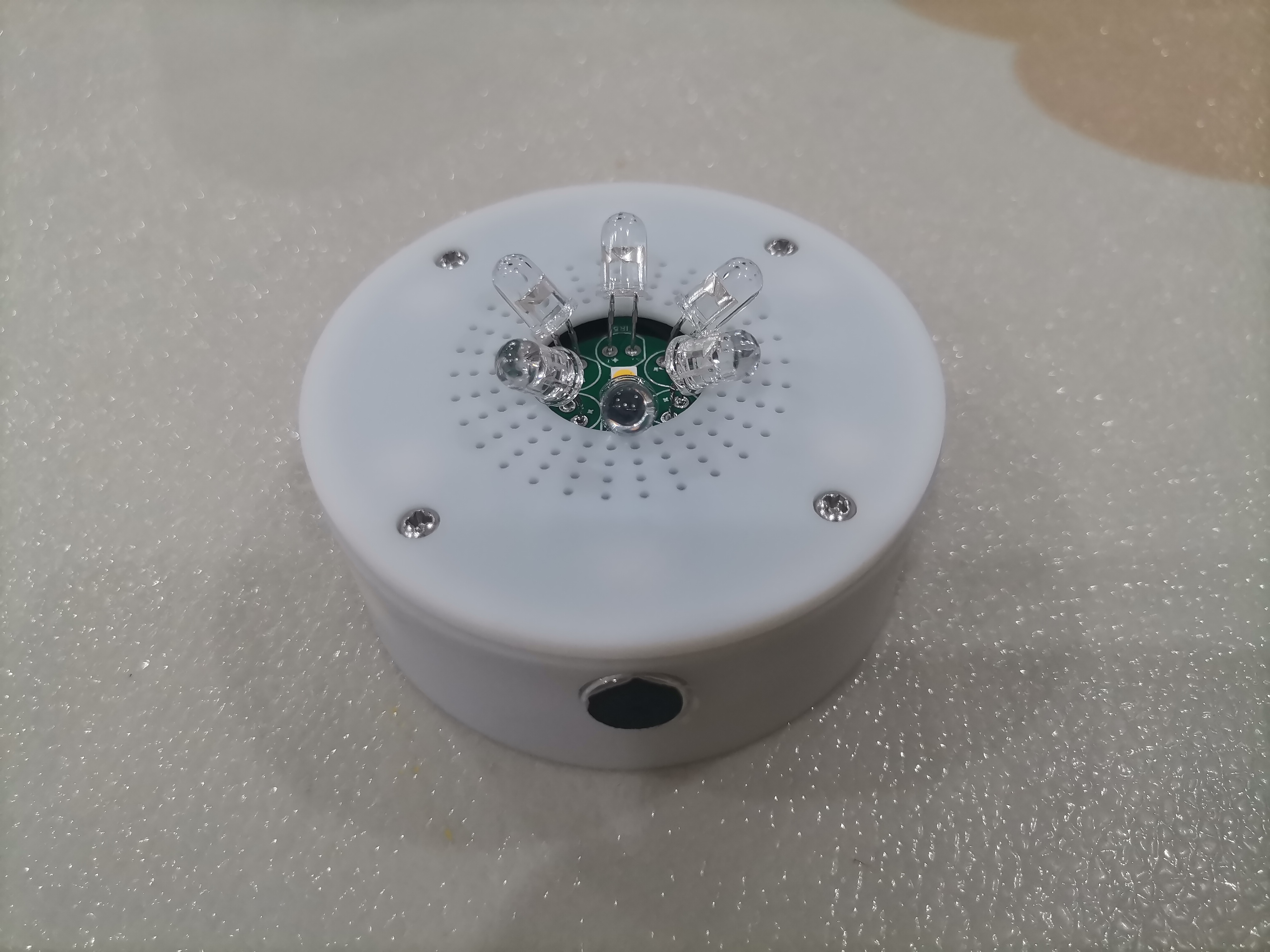
Image of the actual product]








 京公网安备 11010802033920号


 HEDS-5605-C11



