First, I'd like to thank Mr. Wu, the development team, and LCSC for providing this opportunity. They offered a lot of help and very detailed tutorials, enabling me to replicate my first small mobile phone. Finally, I'd also like to thank the members of the LCSC Taishanpai Development Board Exchange Group for their help; there are many excellent experts there.
This project schematic analysis
and design extension is based on the Taishanpai "Fat Girl" mobile phone replication tutorial .
[Fat Girl Mobile Phone] Project Outline - Feishu Cloud Documents (feishu.cn).
On this basis, battery charging and discharging functions have been added, allowing for external battery connection.
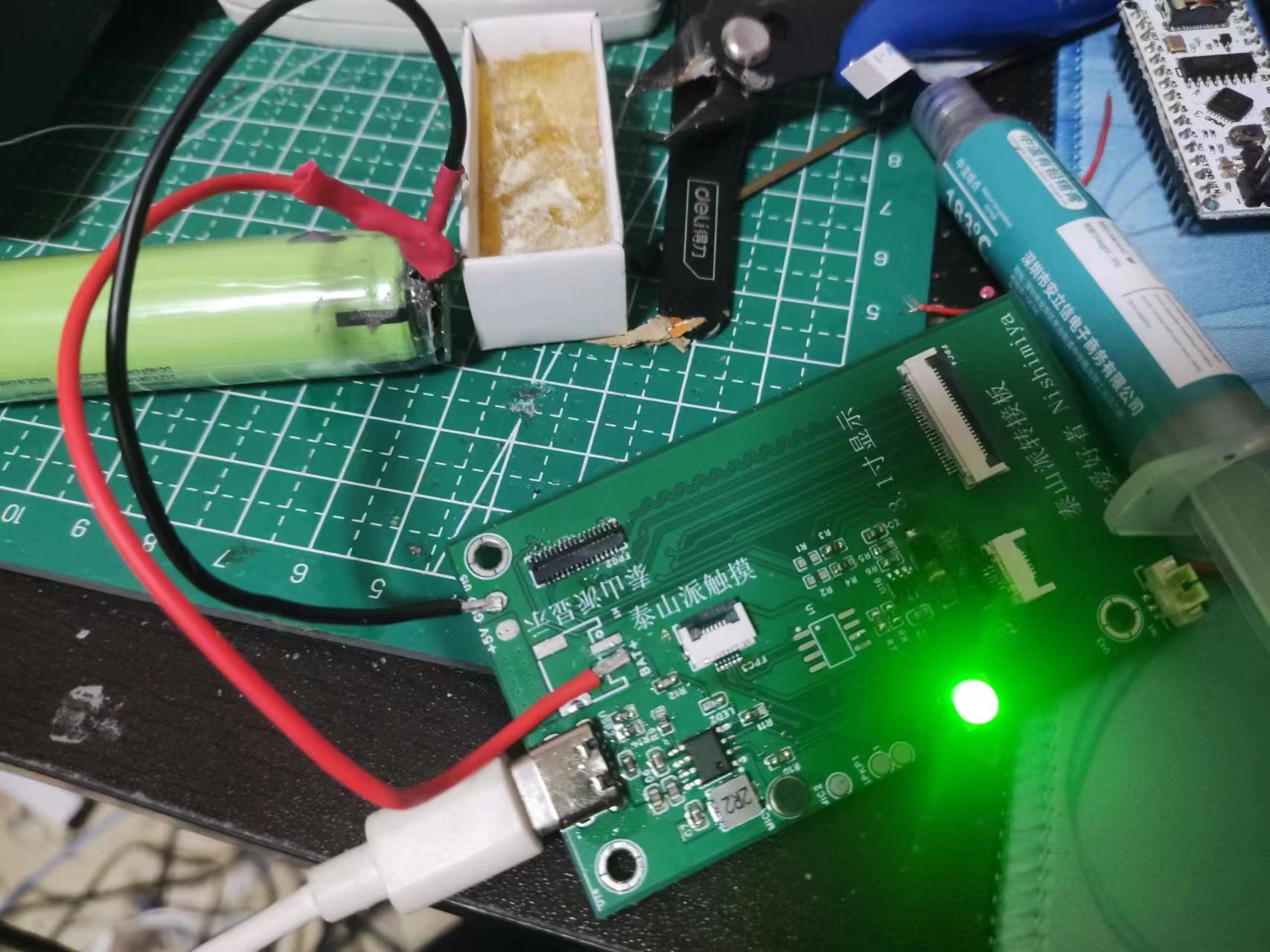
Since I only had 0603 capacitors and resistors on hand, I replaced the 0805 packages with 0603; the soldering difficulty is about the same.
The open-source code
is based on the official LCSC tutorial, with modifications to the compilation image. Currently, it's for Android, and the logo and boot animation have been replaced.
The Android code patch
can be compiled according to the tutorial. Note that you don't need to `make clean` after the first compilation! Otherwise, it will
take a very long time to compile. Make sure the virtual machine has enough memory, otherwise the terminal will crash midway. For
soldering
, I personally recommend using a soldering station. Wu Gong has also provided soldering tutorials for the Taishanpai expansion board.
Always check for short circuits and cold solder joints; if it doesn't light up, it's most likely due to cold solder joints.
(Image showing effect).
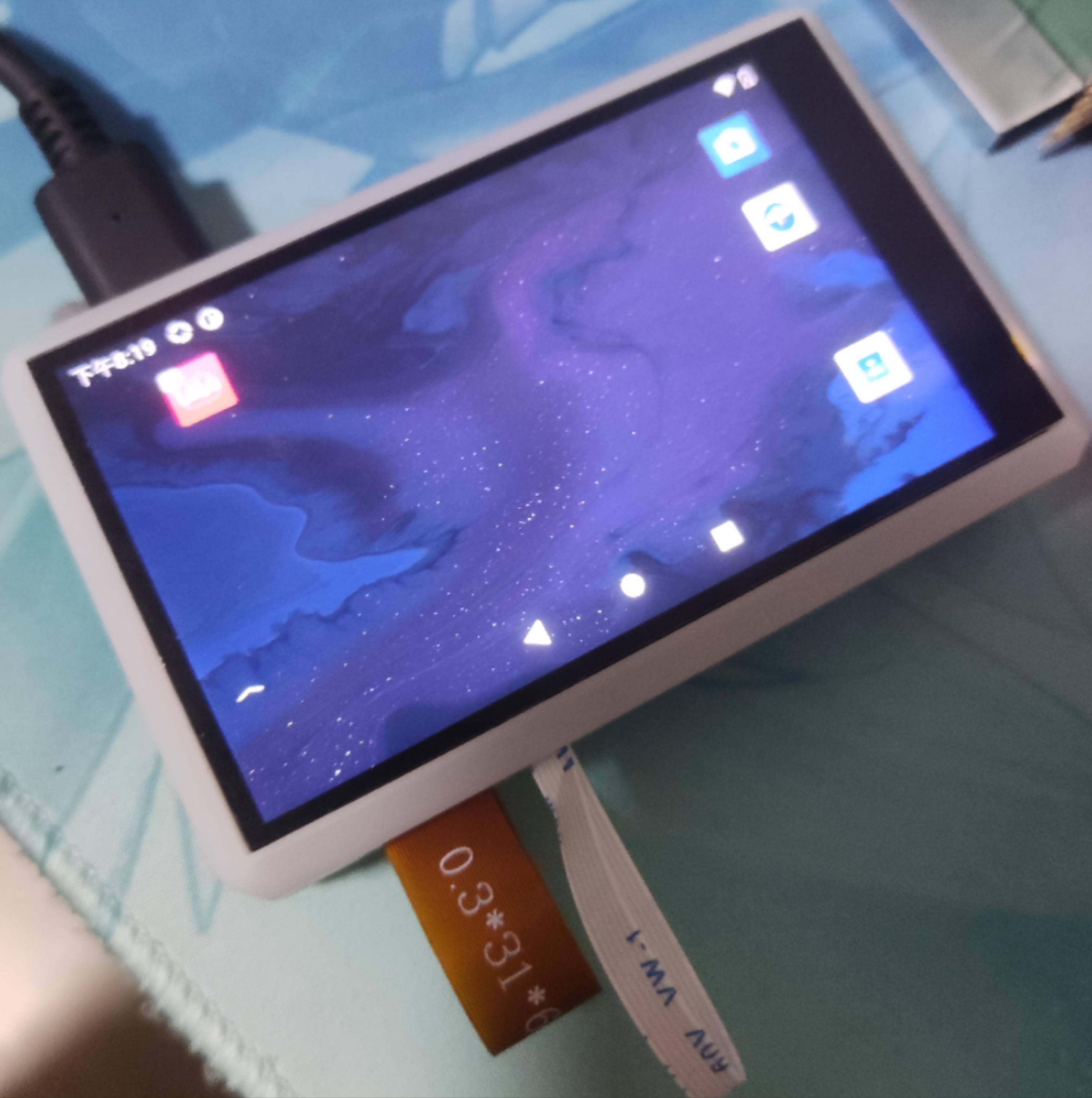
6c4a021b53098e2647997fece129ec1f.mp4
PDF_Mobile Project Based on Taishanpai Development Board.zip
Altium_Mobile Project Based on Taishanpai Development Board.zip
PADS_Mobile Project Based on Taishanpai Development Board.zip
BOM_Mobile Project Based on Taishanpai Development Board.xlsx
94495
SW3556, multi-protocol dual-C port 140W
The Zhirong SW3556 is a step-down controller chip with dual USB-C ports and built-in multiple fast charging protocols. It supports dual-port power blind insertion
(the project is not yet complete, please do not copy). 2024.5.18
(The project is constantly being modified and improved, and its feasibility is being verified. Please stay tuned. 2024.5.29)
The SW3556 from Zhirong is a buck controller chip with dual USB-C ports and built-in multi-fast charging protocols. It supports dual-port blind insertion and independent current limiting for both ports. The built-in synchronous buck converter supports 7A high-current output and uses gallium nitride (GaN) switches for smaller size and higher efficiency. It supports a wide range of fast charging protocols, including custom proprietary fast charging protocols, supporting 20V 7A 140W output and 3.3-21V 6A PPS fast charging output, fully meeting the charging needs of modern mobile phones and high-power devices. The SW3556 uses a synchronous rectification buck topology, supports 40V input, and features a built-in synchronous rectification buck controller. Combined with silicon MOSFETs or GaN switches, inductors, and capacitors, it can achieve 140W high-power output. The built-in buck controller has a switching frequency of 125kHz and supports PFM/PWM modes to optimize conversion efficiency. The SW3556 includes output line loss compensation, supports independent current limiting for both output ports, and supports overheat power reduction and overheat shutdown functions. The chip supports external resistors on the pins to configure output power and dynamic power distribution, eliminating the need for an external microcontroller for multi-port output configuration. The SW3556 adds an input voltage regulation function, reducing the input voltage when no device is connected, thereby reducing overall power consumption and meeting higher energy efficiency requirements. The SW3556 has a built-in 12-bit ADC, supporting input voltage, output voltage, USB-C1 and USB-C2 output current, and temperature acquisition. Microcontrollers can read chip parameters and display the operating status in real time. It uses a QFN4*4-28 package, offering enhanced functionality while maintaining the same package size. It can be used in multi-port high-power PD chargers and car chargers. Furthermore, the Zhirong synchronous buck converter supporting fast charging protocols has been adopted by many well-known brands such as Ugreen, Nubia, ZENDURE, Pisen, ASUS, and Lenovo. It not only supports high-power mobile phone fast charging but also gallium nitride applications; utilizing the high-frequency and high-efficiency advantages of third-generation semiconductors, it replaces traditional MOSFETs, achieving a smaller size and higher efficiency. While saving energy and reducing carbon emissions, it also reduces product size and improves product competitiveness.
BOM_Board1_Schematic1_2024-05-18.xlsx
PDF_SW3556, Multi-protocol Dual USB-C 140W.zip
Altium_SW3556, Multi-protocol Dual USB-C 140W.zip
PADS_SW3556, Multi-protocol Dual USB-C 140W.zip
BOM_SW3556, Multi-protocol Dual USB-C 140W.xlsx
94500
Based on the LCSC Taishanpai 3.1-inch smartphone
Lichuang Taishan School Training Camp Activities~
Functional Description:
Schematic Diagram: Based on the Taishanpai Training Camp's 3.1-inch Smartphone Training Camp activities, hardware and software design was carried out. Hardware design included the removal of the Taishanpai MIPI interface, microphone & speaker, design of onboard backlight control circuit, 3.1-inch touchscreen and 3.1-inch MIPI interface, completing the basic hardware design of the smartphone.
PCB Design Notes: The PCB design was mainly based on Mr. Wu's small phone tutorial. The main concern was controlling the differential pair trace length and
soldering issues: Manual soldering was mainly difficult on the FPC. Initially, several boards couldn't light up the screen, leading to suspicions that the screen itself was faulty. Later, the FPC connectors were soldered using a blower on the back. Finally, physical verification confirmed that no components were damaged; the problem was primarily with the soldering.
Physical demonstration:
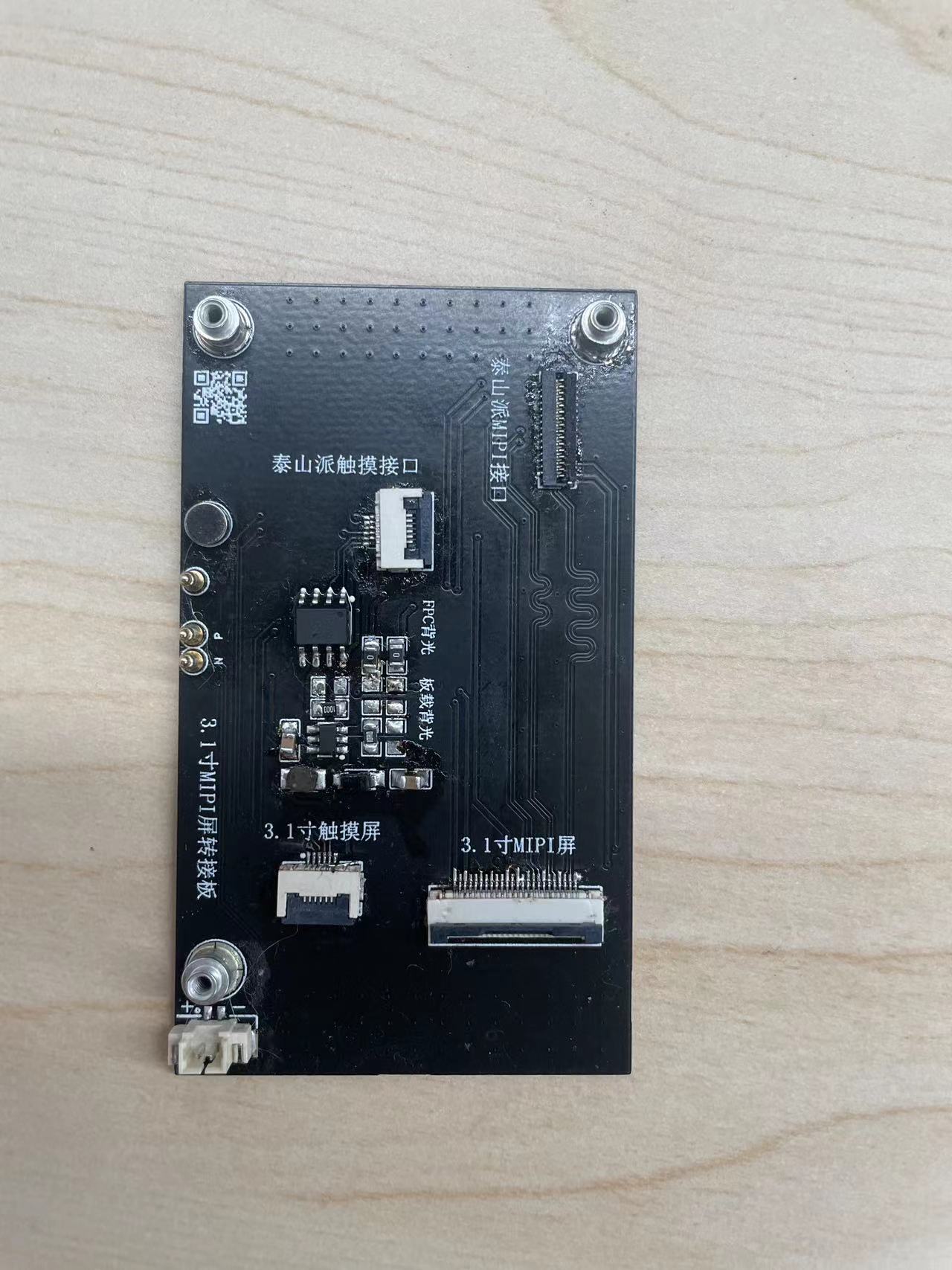
Video demonstration: https://www.bilibili.com/video/BV1VwTceZENi/?pop_share=1&vd_source=a1bee00019ba812a5a1c6ce2799547b1
Open source code: VII. Mobile Comprehensive Project - Feishu Cloud Document (feishu.cn)
Code reference Wu Gong's demonstration tutorial, hereby special thanks to Wu Gong, from zero to one, although very general, I still completed my first small project.
PDF_Based on the LCSC Taishanpai 3.1-inch Smartphone.zip
Altium_based on the LCSC Taishanpai 3.1-inch smartphone.zip
PADS_Based on the LCSC Taishanpai 3.1-inch Smartphone.zip
BOM_Based on the LCSC Taishanpai 3.1-inch Smartphone.xlsx
94502
electronic








 京公网安备 11010802033920号


 MQSMCJLCE24A