I was making a 24-solar-term clock. I initially planned to use a panel, but then I saw a color printing promotion from SICHUAN, so I made a 100mm diameter circle to test the waters.
This is just a modular panel,
cut in the middle. A stepper motor drives the middle section, connecting it to the outside. The central circular plate connects to the outer circle via spring contacts, forming a circuit loop that illuminates the LEDs.
This first version uses nine LEDs connected in series; later versions will use parallel connections to reduce voltage.
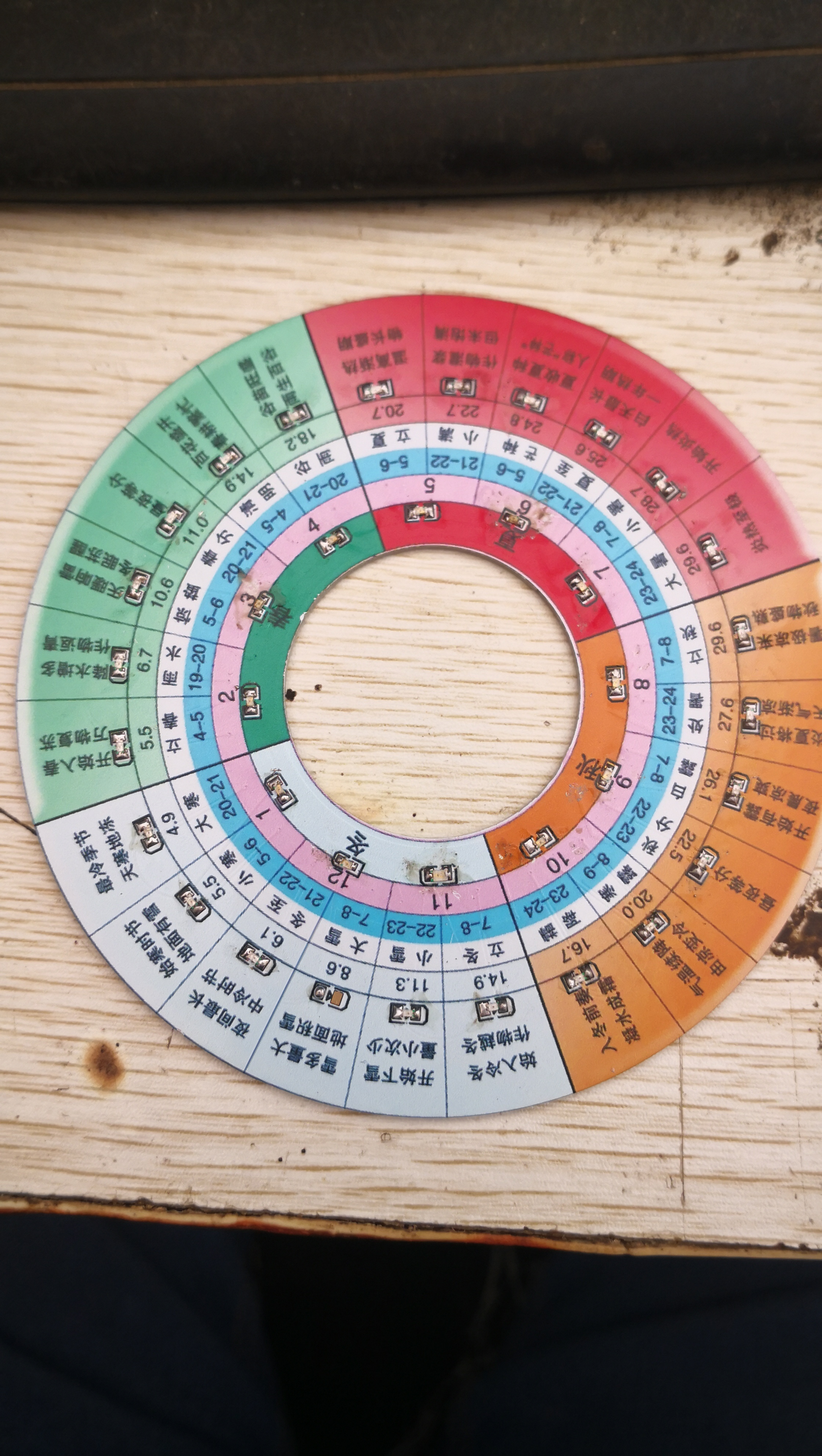
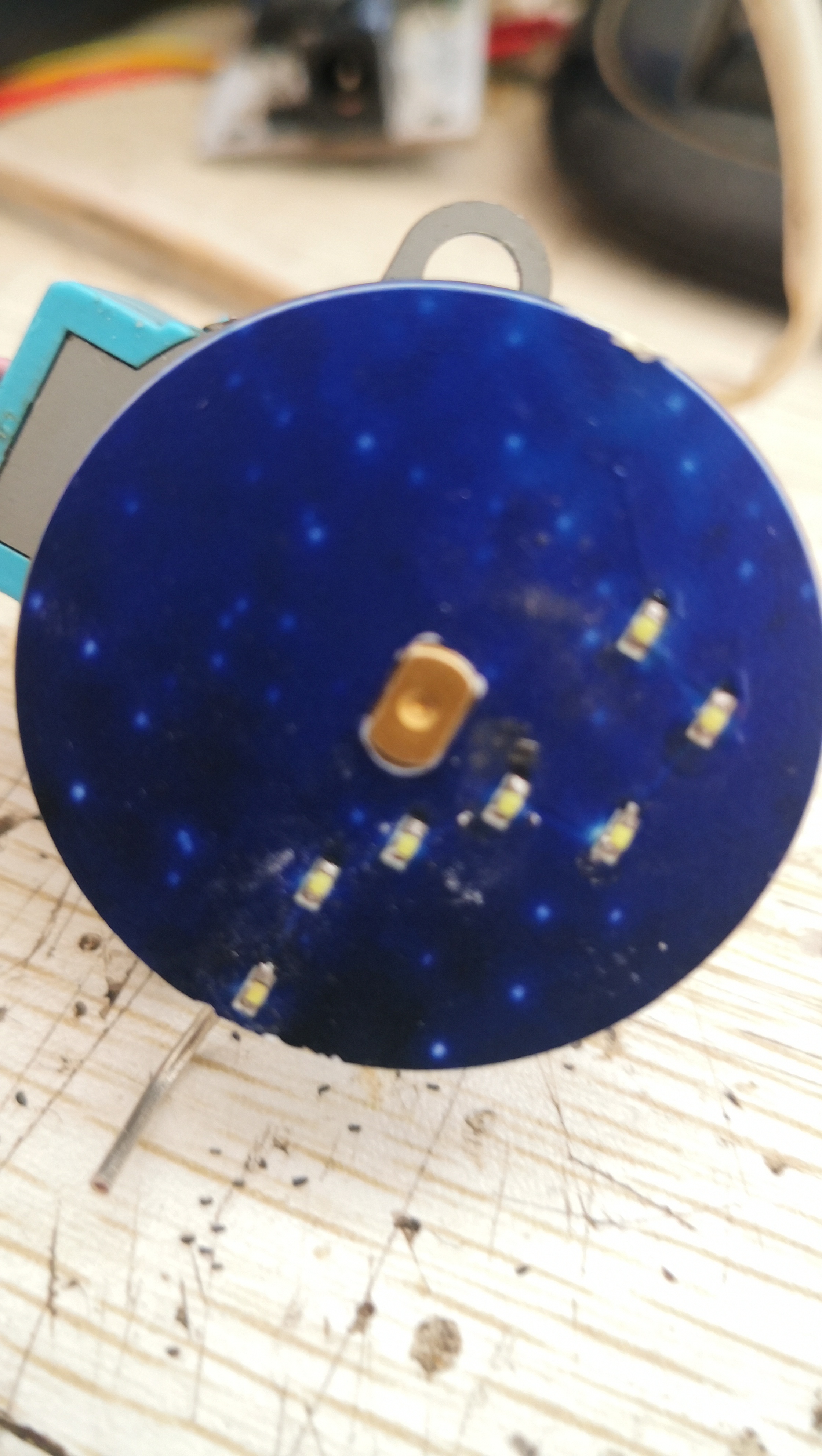
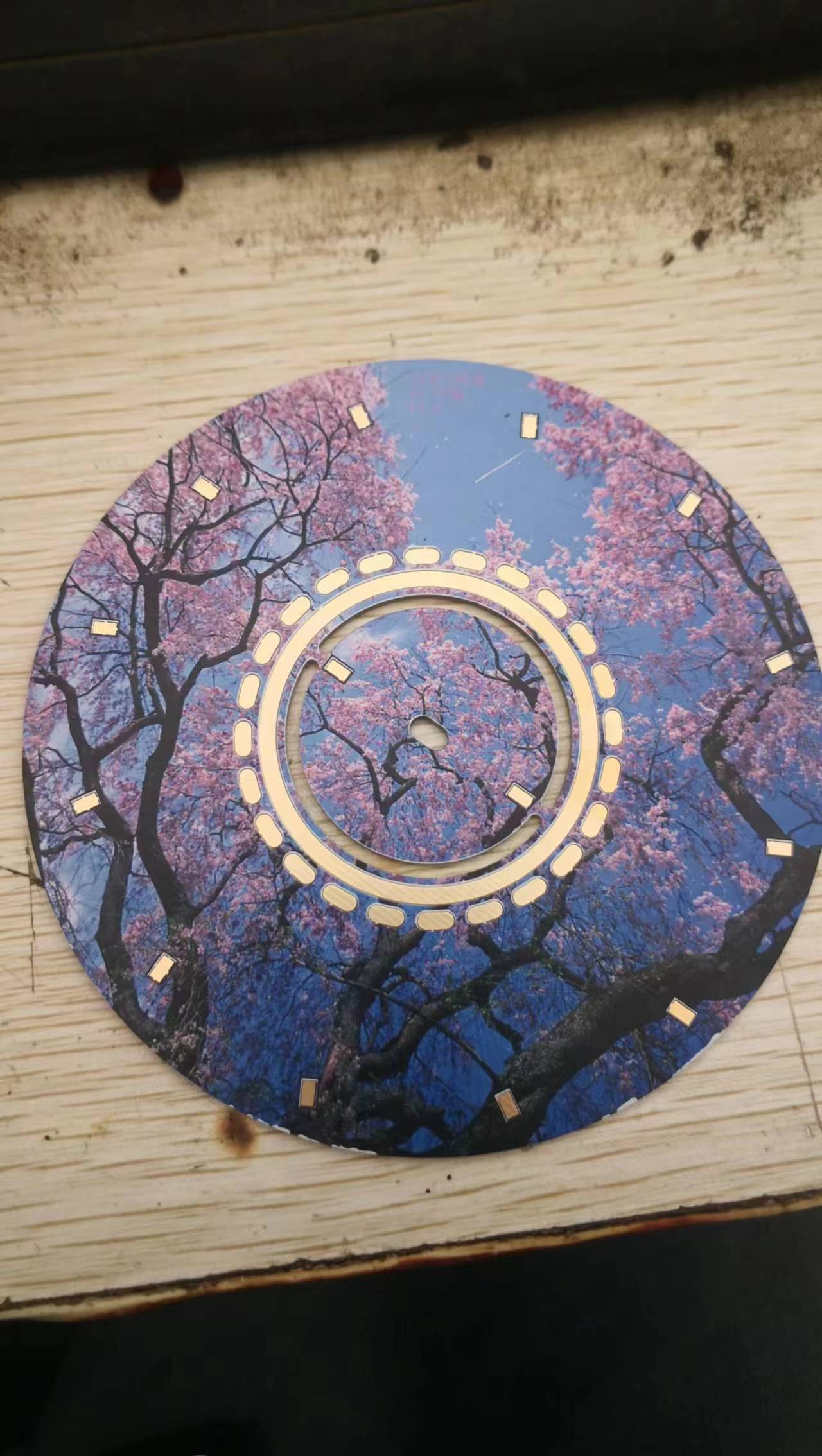
PDF_Solar Terms Spinner.zip
Altium_Solar Terms Turntable.zip
PADS_Solar Terms Turntable.zip
BOM_Solar Terms Turntable.xlsx
97033
Expanding Dock (Color Printing Submission)
This project is a port replicator, or docking station, created in response to a design competition for JLCPCB color screen printing and based on my own specific needs.
A docking station, also known as a port replicator, is an external device designed specifically for laptops. By replicating or even expanding the ports of a laptop, it allows for convenient one-stop connection between the laptop and multiple accessories or external devices (such as power adapters, network cables, mice, external keyboards, printers, and external monitors).
Next, I will explain the function and characteristics of the components based on the schematic diagram.
First, let's look at the chip section.
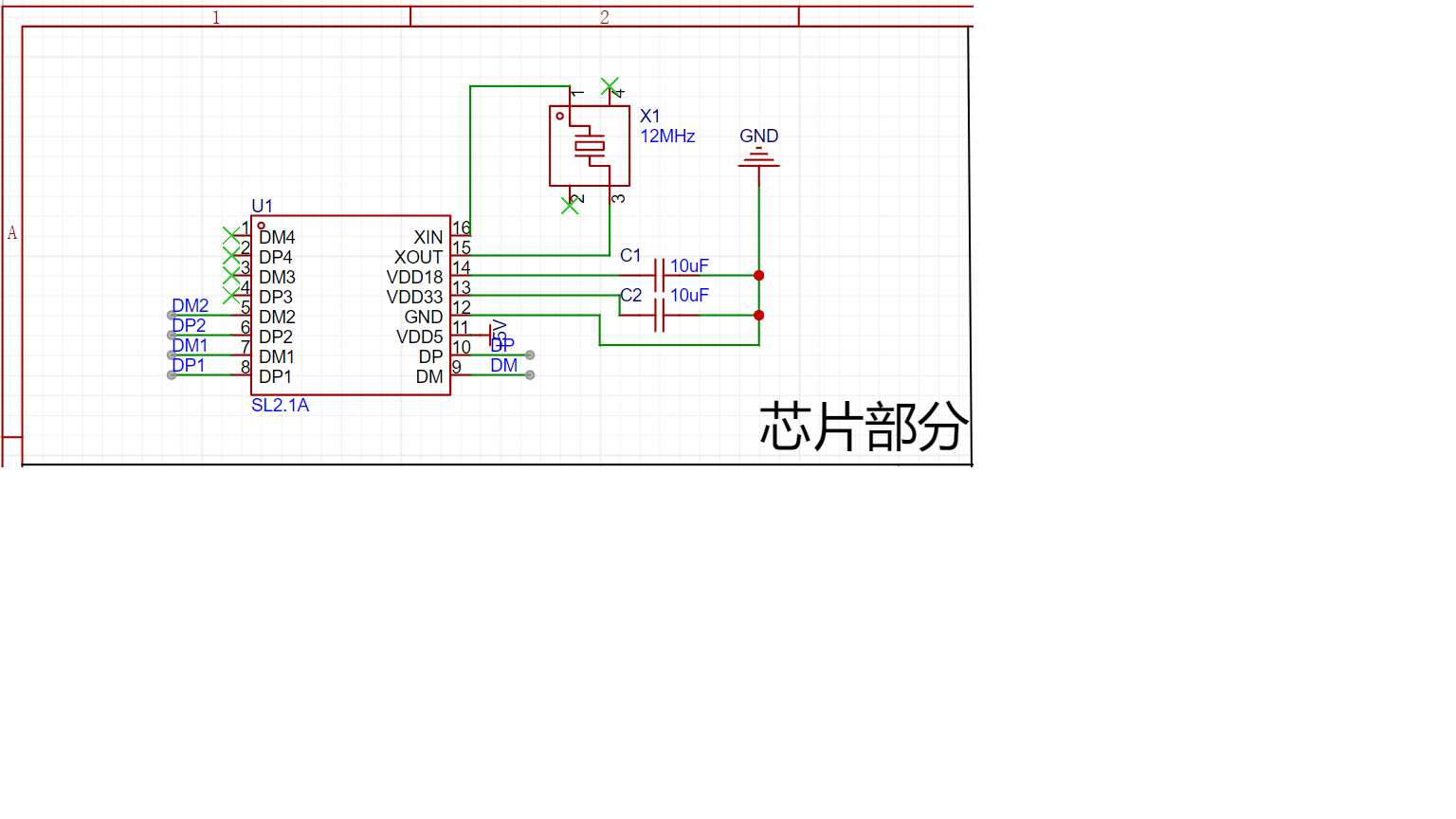
The device with the reference number X1 is NX3225SA-12MHz-STD-CSR-6, which is a passive crystal oscillator. Here are some concepts we need to know:
Crystal is short for Crystal Resonator, also known as a passive crystal. It generally utilizes the piezoelectric effect of quartz crystals to generate a high-precision oscillation frequency. Passive crystals require capacitors and resistors to oscillate.
An active crystal oscillator is short for Crystal Oscillator. Active crystal oscillators integrate the oscillation circuit internally and can operate normally without the need for additional external components, but they require an external power supply.
A passive crystal oscillator (crystal) is mainly composed of a quartz crystal, a base, a casing, silver paste, and silver. Essentially, it's a quartz crystal resonator that utilizes the piezoelectric effect of quartz crystals to generate a high-precision oscillation frequency. A passive crystal oscillator has two pins, is non-polarized, and requires a clock circuit to generate an oscillation signal; it cannot oscillate on its own and is therefore a passive component.
Passive crystal oscillators require matching capacitors.
We use passive crystal oscillators to generate frequency for our circuits. We connect two 10uF capacitors to the passive crystal oscillator to form a circuit, enabling it to function.
The chip we use is the SL2.1A.
The SL2.1A is a highly integrated, high-performance, low-power USB 2.0 hub controller chip. This chip uses STT technology, a single power supply, and a 5V supply voltage. It internally integrates a 5V to 3.3V converter, requiring only an external power supply filter capacitor. The chip has a built-in reset circuit, and its low-power technology makes it even more outstanding.
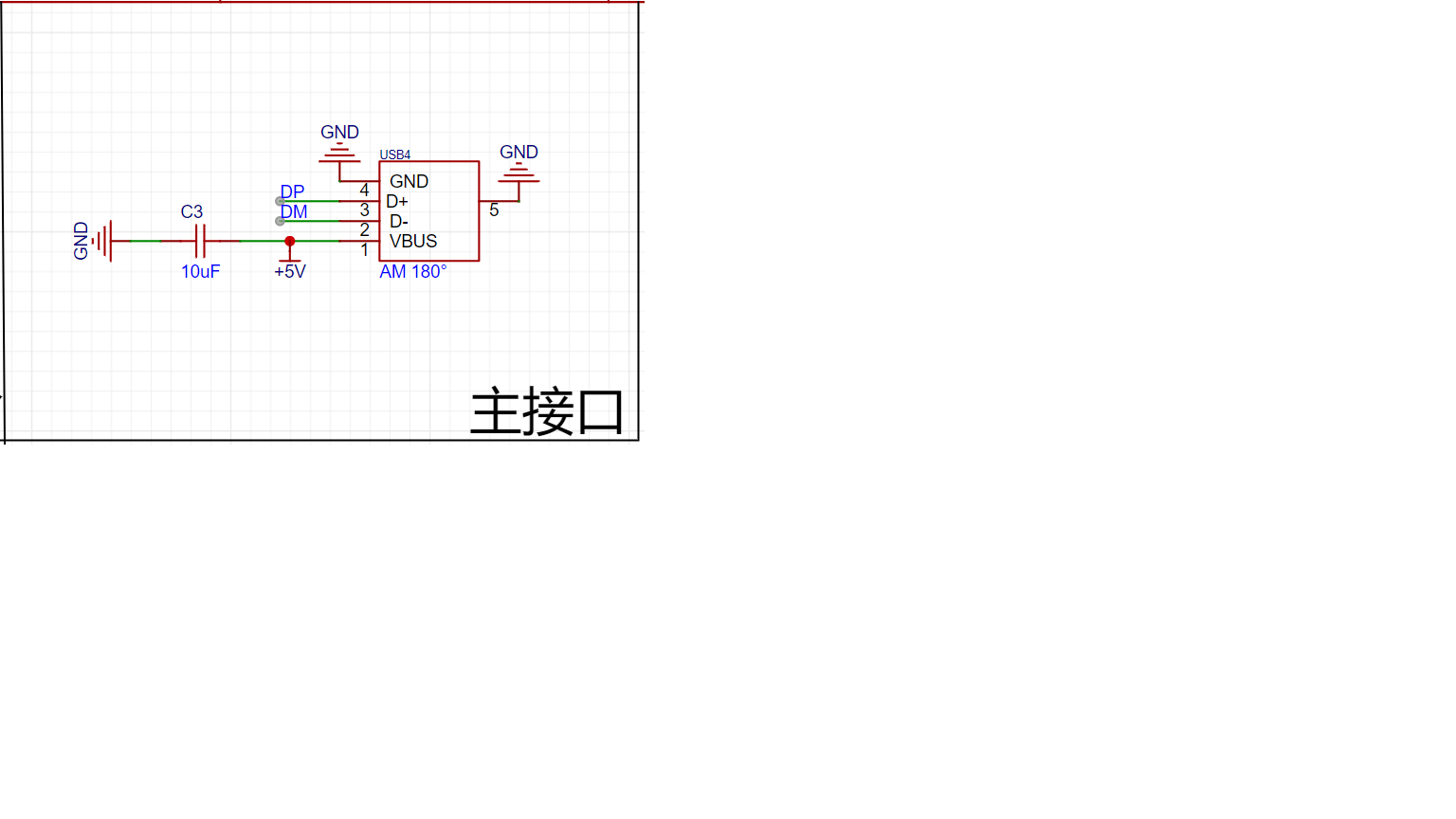
The middle two pins of the male connector of the main interface are configured as the USB uplink DP signal and USB uplink DM signal of SL2.1A, respectively. A 10uF capacitor is also included in the main interface circuit for resonance and filtering.
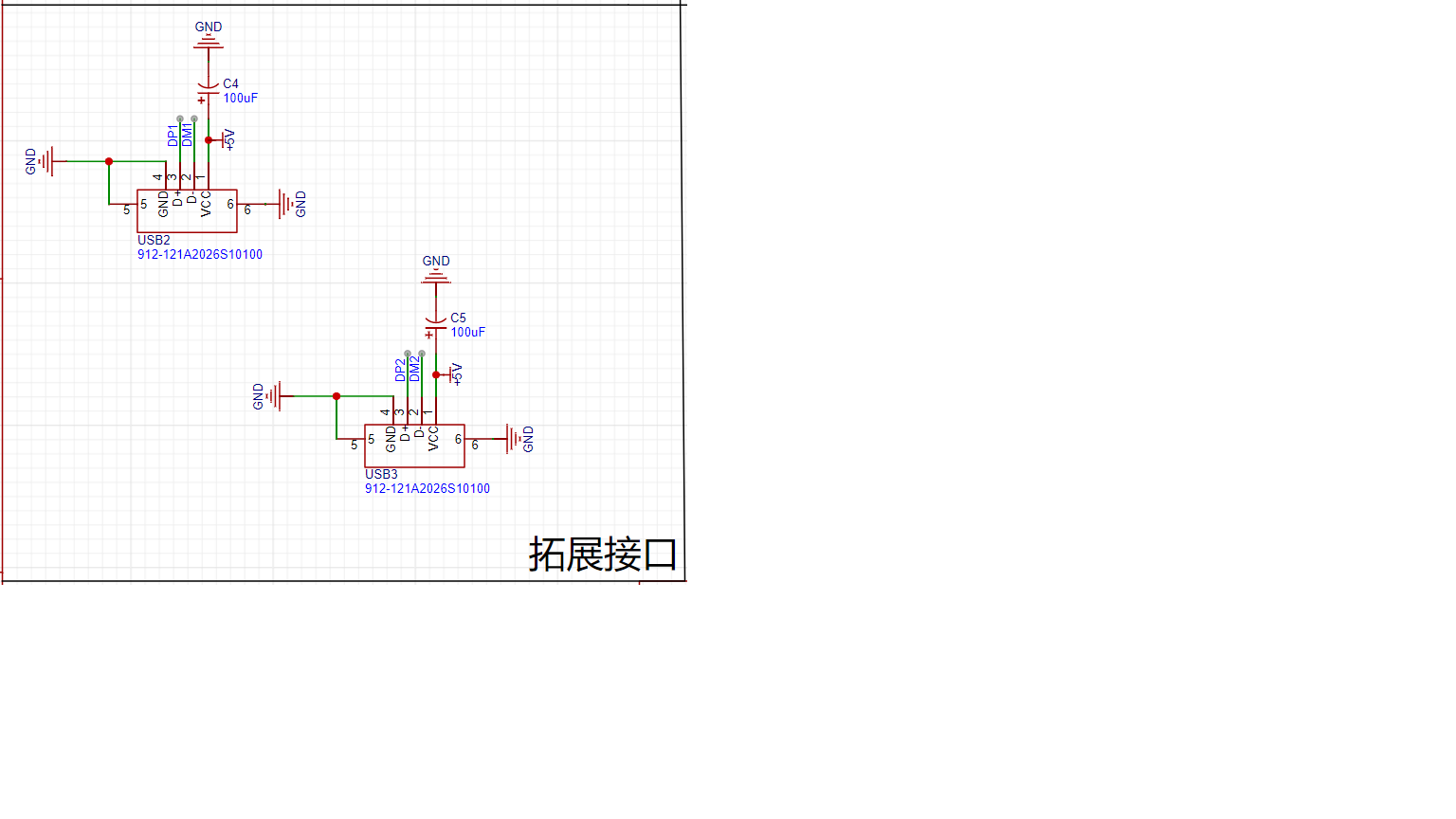
The middle two pins of the two female connectors of the expansion interface are configured as the USB DP signal and USB DM signal of Downlink Port 1 and Downlink Port 2, respectively. A 100uF capacitor is connected to each of the two female connectors for filtering.
This is the relevant architecture of this project. Welcome friends and teachers to exchange ideas, provide guidance, and ask questions.
Below is a physical demonstration.
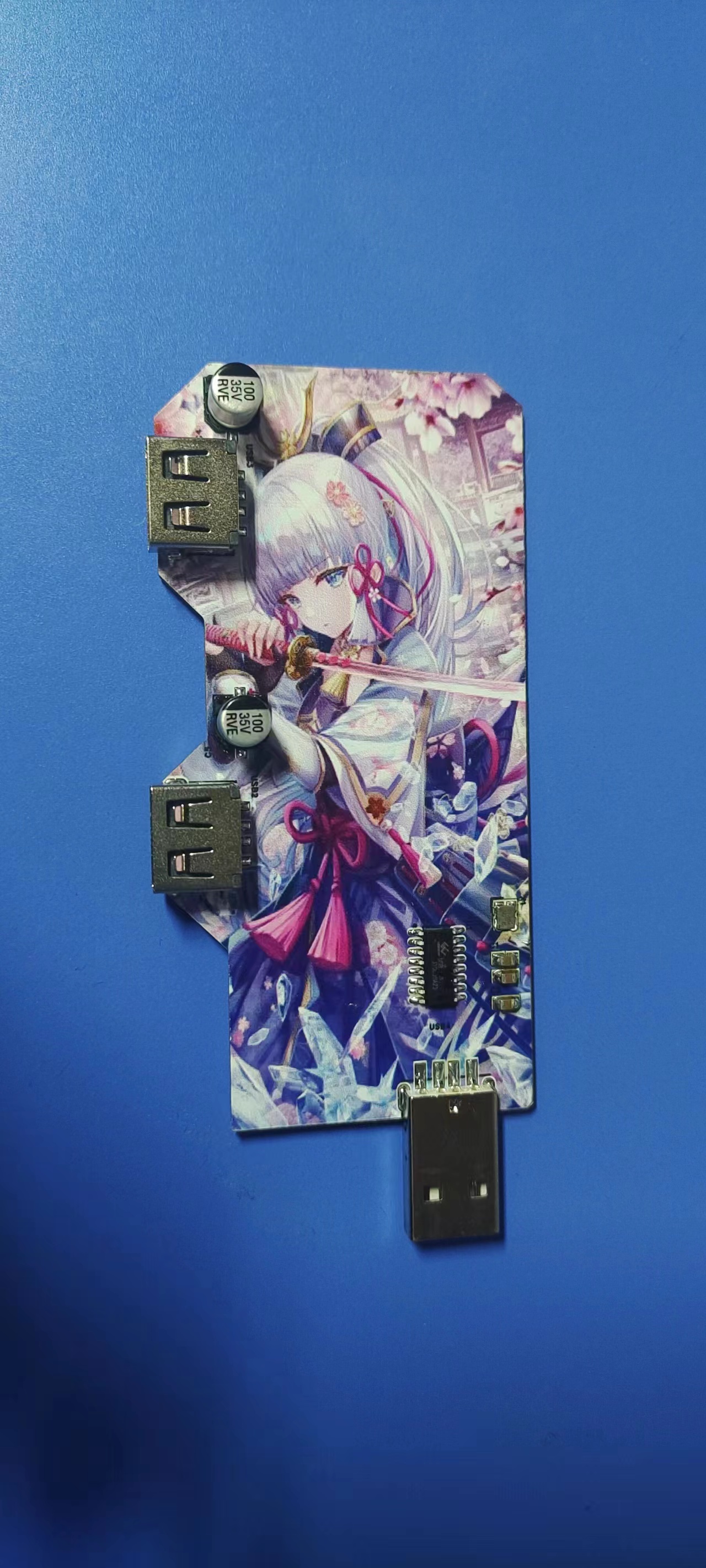
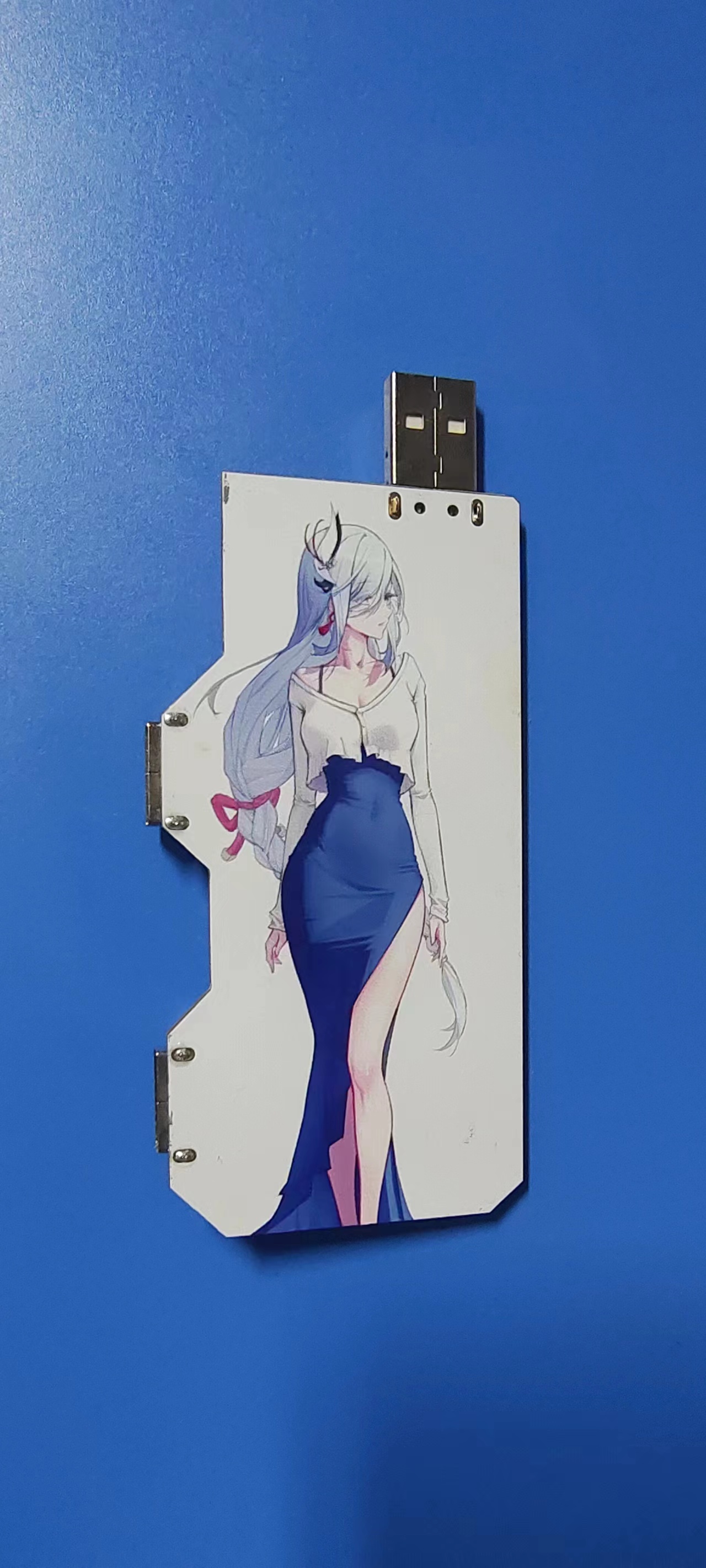
888cb255fa5c4ac1a978f594ade690a2.mp4
WeChat image_20231123113150.jpg
WeChat image_20231123113143.jpg
PDF_Expansion Dock (Color Print Collection).zip
Altium_Extension Dock (Color Print Collection).zip
PADS_Extension Dock (Color Printing Collection).zip
BOM_Expansion Dock (Color Printing Submission).xlsx
97035
BM3451 3-cell battery protection board
BM3451 3-cell battery protection
This is a direct copy of the BM3451 [Four-Series Lithium Battery Protection Board] - JLCPCB EDA Open Source Hardware Platform (oshwhub.com) original author, with modifications to the LED section. The number of MOSFETs has been reduced to two, and the current sensing resistor has been changed to 10mΩ.
The maximum current calculation method is 0.1V/R18=Imax.
Overcharge and over-discharge protection voltages should be selected according to the datasheet. This project uses the BM3451BHDC-T28A as the main chip, for lithium iron phosphate batteries.
Overcharge protection is 3.65V,
over-discharge protection is 2.35V,
maximum current (200ms) is 10A (default),
maximum current (20ms) is 30A (default),
and short circuit protection is 600us (maximum).
Please solder the battery pack according to the board's instructions:
1 is total negative , 2
is the first series positive
, 3 is the second series positive,
and 4 is total positive.
To achieve a full 10A current, please add more solder!
PDF_BM3451 3-cell battery protection board.zip
Altium_BM3451 3-cell battery protection board.zip
PADS_BM3451 3-cell battery protection board.zip
BOM_BM3451 3-cell battery protection board.xlsx
97040
Automotive Ethernet TE Connectivity and Rosen e6s20a Adapter Board
Rosenberger E6S20A-40MT5-Z and Tyco 2304372-1 adapters
are respectively converted to 2-pin terminals.
Rosenberger E6S20A-40MT5-Z and Tyco 2304372-1 adapters are respectively converted to 2-pin terminals.
PDF_Automotive Ethernet TE Connector and Rosen e6s20a Adapter Board.zip
Altium_Automotive Ethernet TE Connector and Rosen e6s20a Adapter Board.zip
PADS_Automotive Ethernet TE Connector and Rosen e6s20a Adapter Board.zip
BOM_Automotive Ethernet Tyco and Rosen e6s20a Adapter Board.xlsx
97042
electronic








 京公网安备 11010802033920号


 M74HC7244F1R



