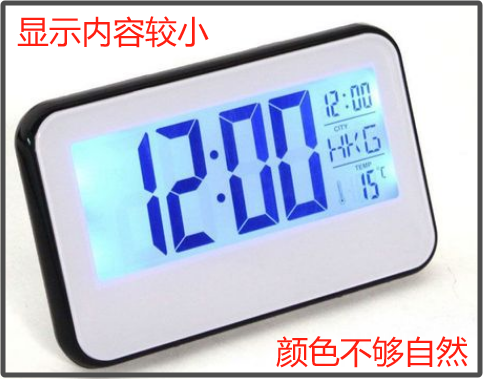
 Current Situation: Quartz clocks are widely available in supermarkets, convenience stores, and general stores, in various sizes, but they all use dry cell batteries, which need to be replaced every few months.
 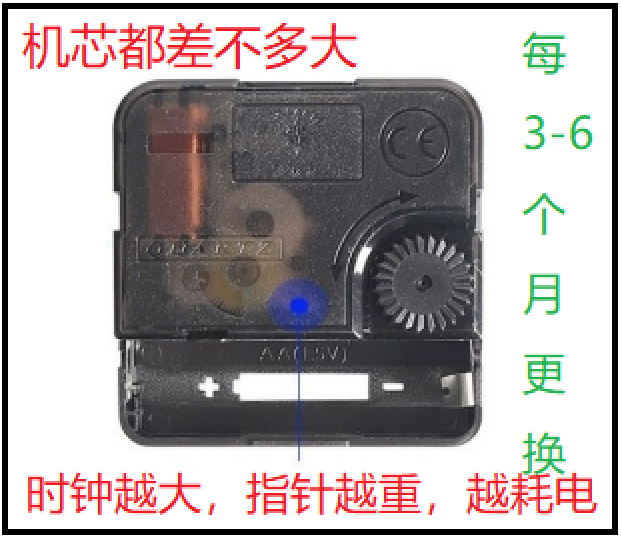 Optimization: This project designs a simple, inexpensive module that allows quartz clocks to operate without maintenance, providing continuous power. This allows users to enjoy the visual appeal of a large clock while eliminating maintenance and hassle.
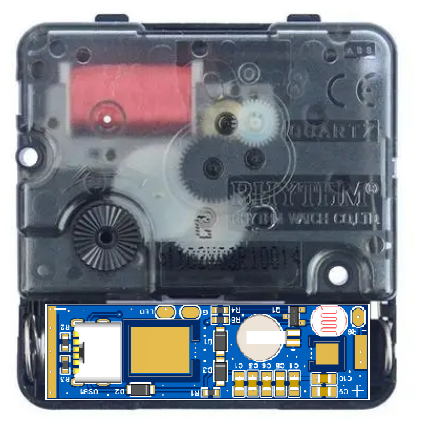
 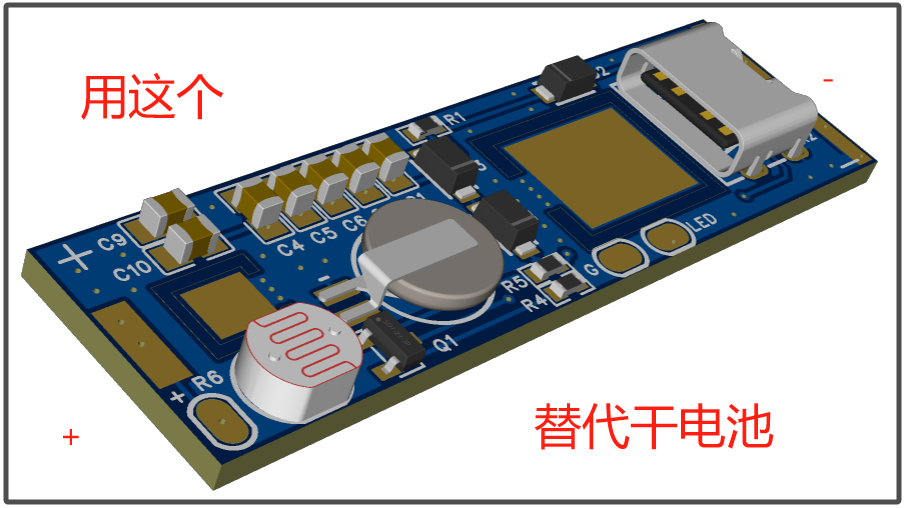 Implementation: After receiving the board, remove the two squares in the middle for later use. Then solder the components, and solder the two squares to their respective ends, with the smaller one at the top (positive) and the larger one at the bottom (negative).
 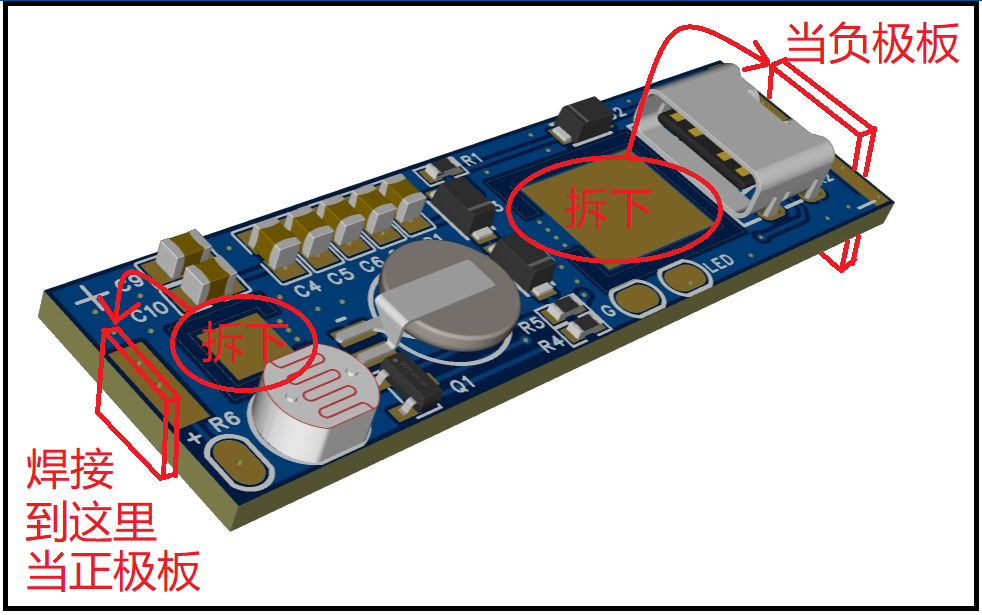 Optional 1: Components as shown in the diagram. If lighting is not needed, they can be left unattached.
 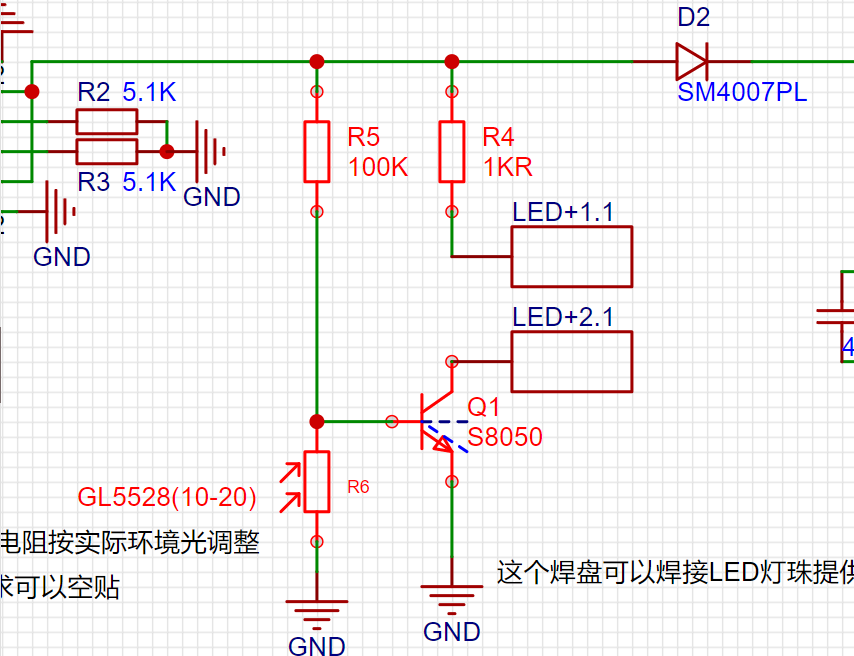 Optional 2: If there is no supercapacitor, multiple ceramic capacitors can be used as a substitute, but the power-off time may be shorter.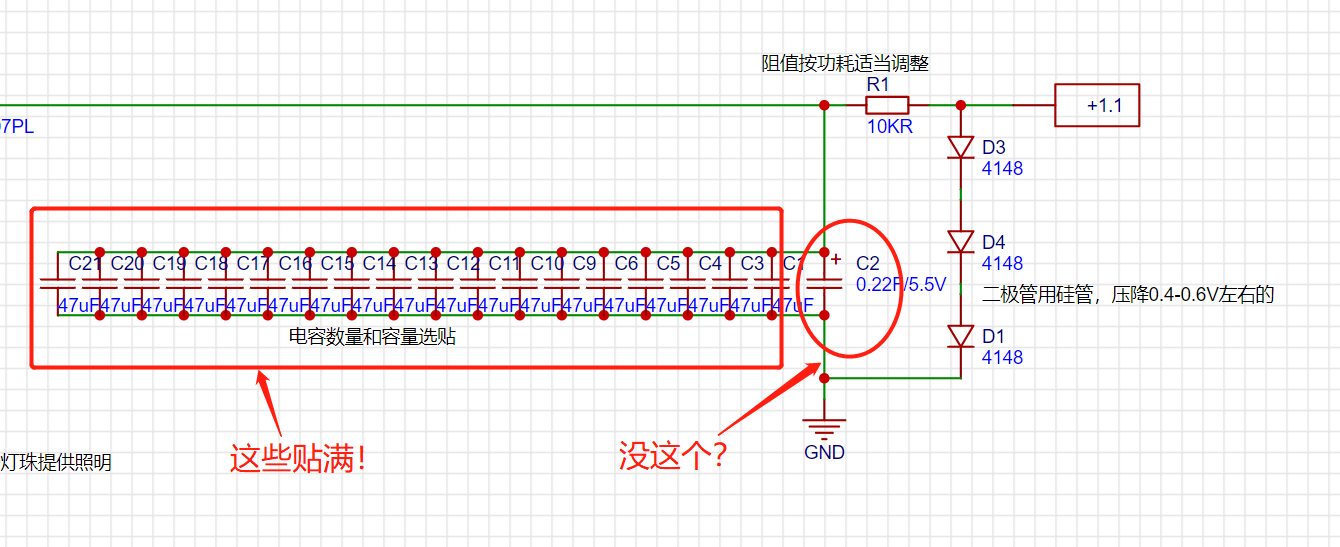
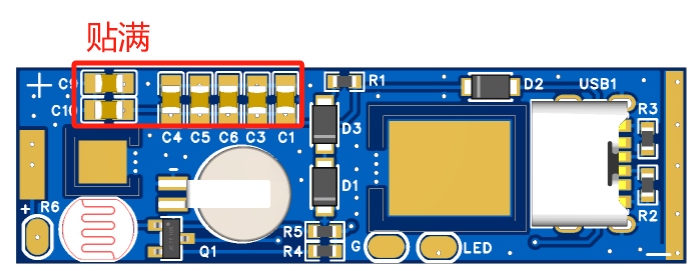 The purpose of these capacitors and supercapacitors is to ensure the clock can continue to operate normally even during short power outages, avoiding the need for time recalibration.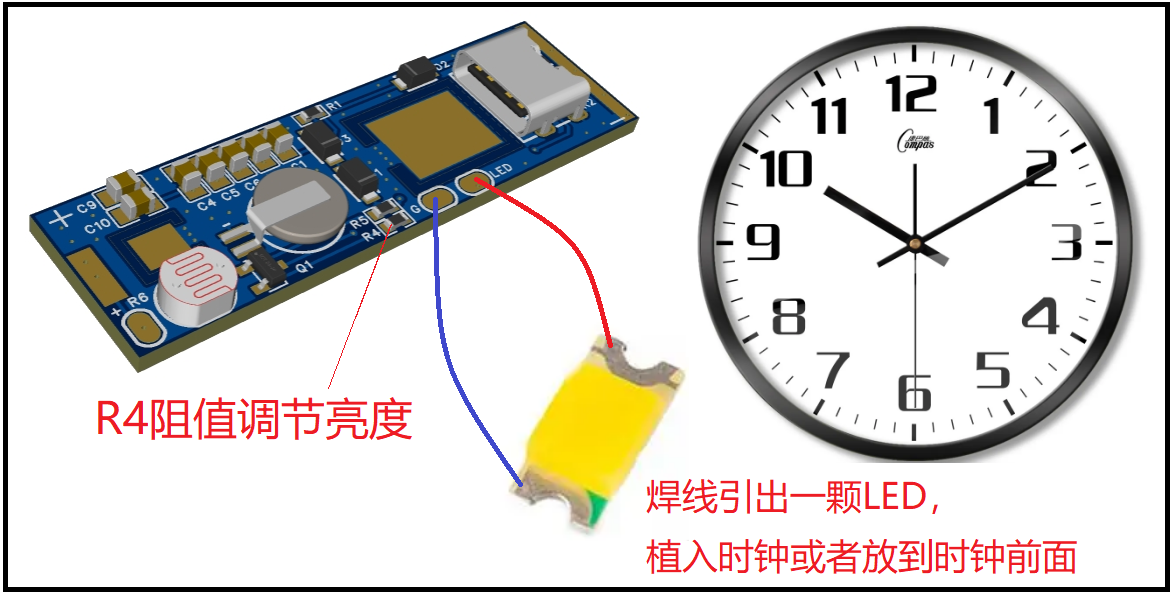
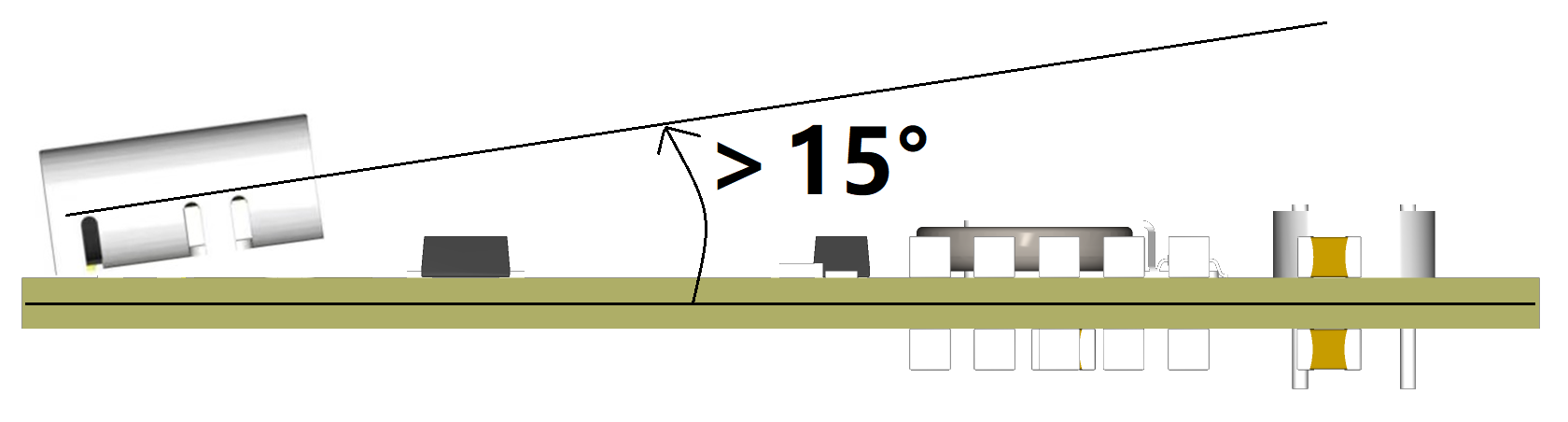
 TYPE-C Soldering Precautions: When soldering the socket, ensure it is slightly tilted to facilitate insertion of the TYPE-C charging cable.
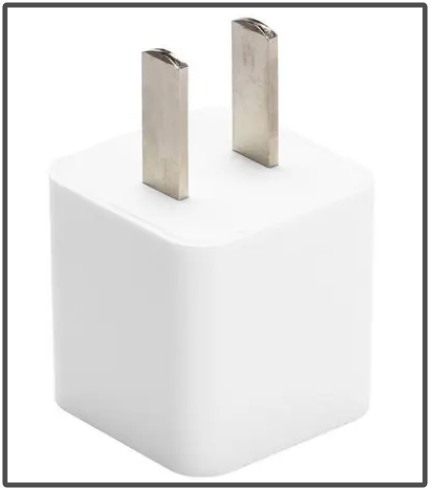
  Usage: Finally, find a 5V 200mA or higher power adapter and a TYPE-C charging cable. Continuously plug the power supply into the mains to power the quartz clock. For a neater look, find a wall socket to hide the power adapter and charging cable.
  Video Description: [This is the clock you should have at home; add one item and it'll be maintenance-free for life! - Bilibili] https://b23.tv/9UiRh0z

All reference designs on this site are sourced from major semiconductor manufacturers or collected online for learning and research. The copyright belongs to the semiconductor manufacturer or the original author. If you believe that the reference design of this site infringes upon your relevant rights and interests, please send us a rights notice. As a neutral platform service provider, we will take measures to delete the relevant content in accordance with relevant laws after receiving the relevant notice from the rights holder. Please send relevant notifications to email: bbs_service@eeworld.com.cn.
It is your responsibility to test the circuit yourself and determine its suitability for you. EEWorld will not be liable for direct, indirect, special, incidental, consequential or punitive damages arising from any cause or anything connected to any reference design used.
Supported by EEWorld Datasheet
EEWorld
subscription
account

EEWorld
service
account

Automotive
development
community

Robot
development
community

About Us Customer Service Contact Information Datasheet Sitemap LatestNews



Room 1530, 15th Floor, Building B,
No.18 Zhongguancun Street,
Haidian District,
Beijing, Postal Code: 100190
China
Telephone: 008610 8235 0740
 京公网安备 11010802033920号


 X9408WV24



