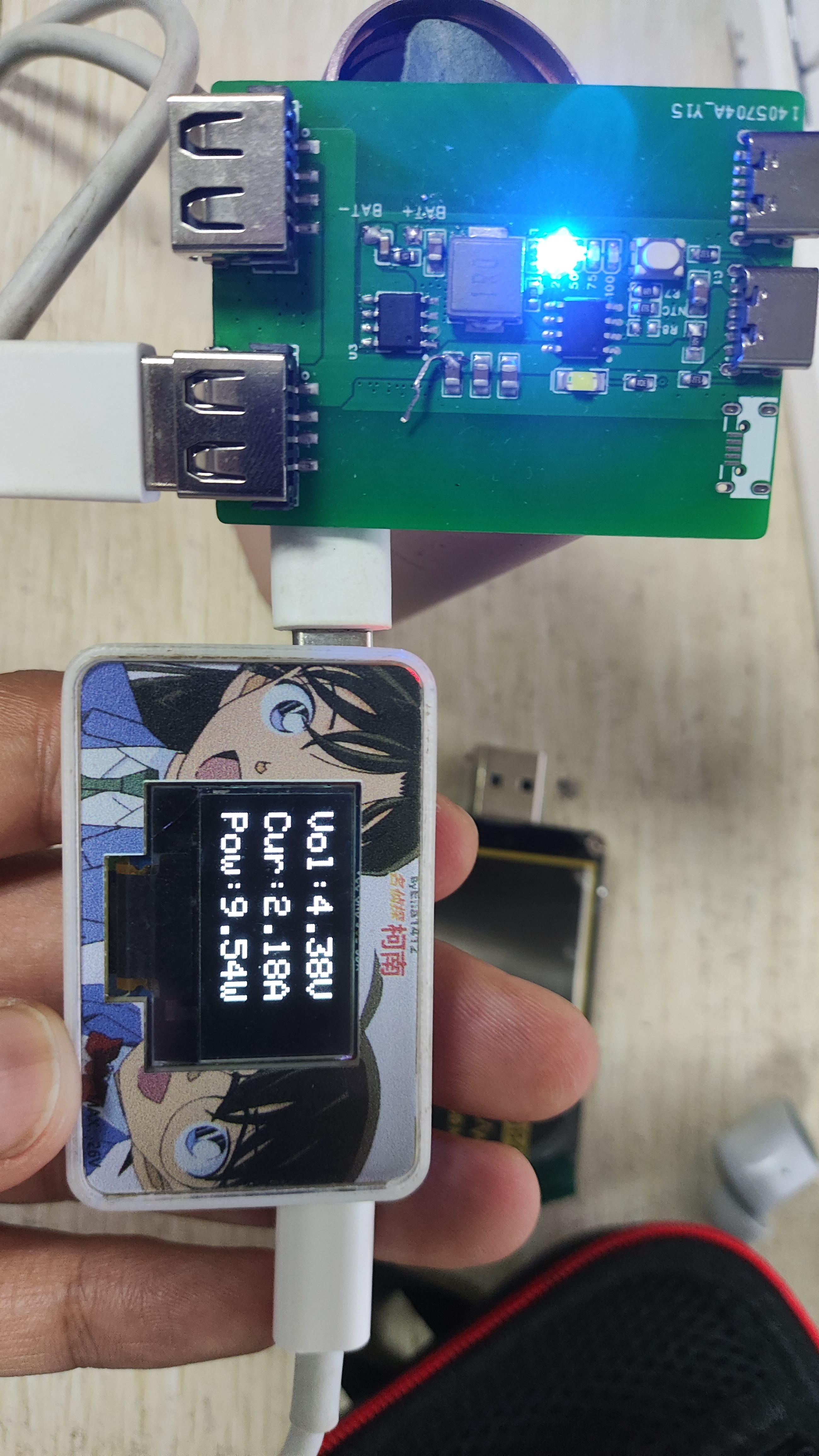
The IP5407 is a multi-functional power management SOC integrating a boost converter, lithium battery charging management, and battery level indicator, providing a complete power solution for power banks. Features
include: 2.1A/2.4A synchronous boost conversion, 2.0A synchronous switching charging; boost efficiency up to 93%; charging efficiency up to 91%; built-in power path management supporting simultaneous charging and discharging; output supports 60mV line compensation
and discharging.
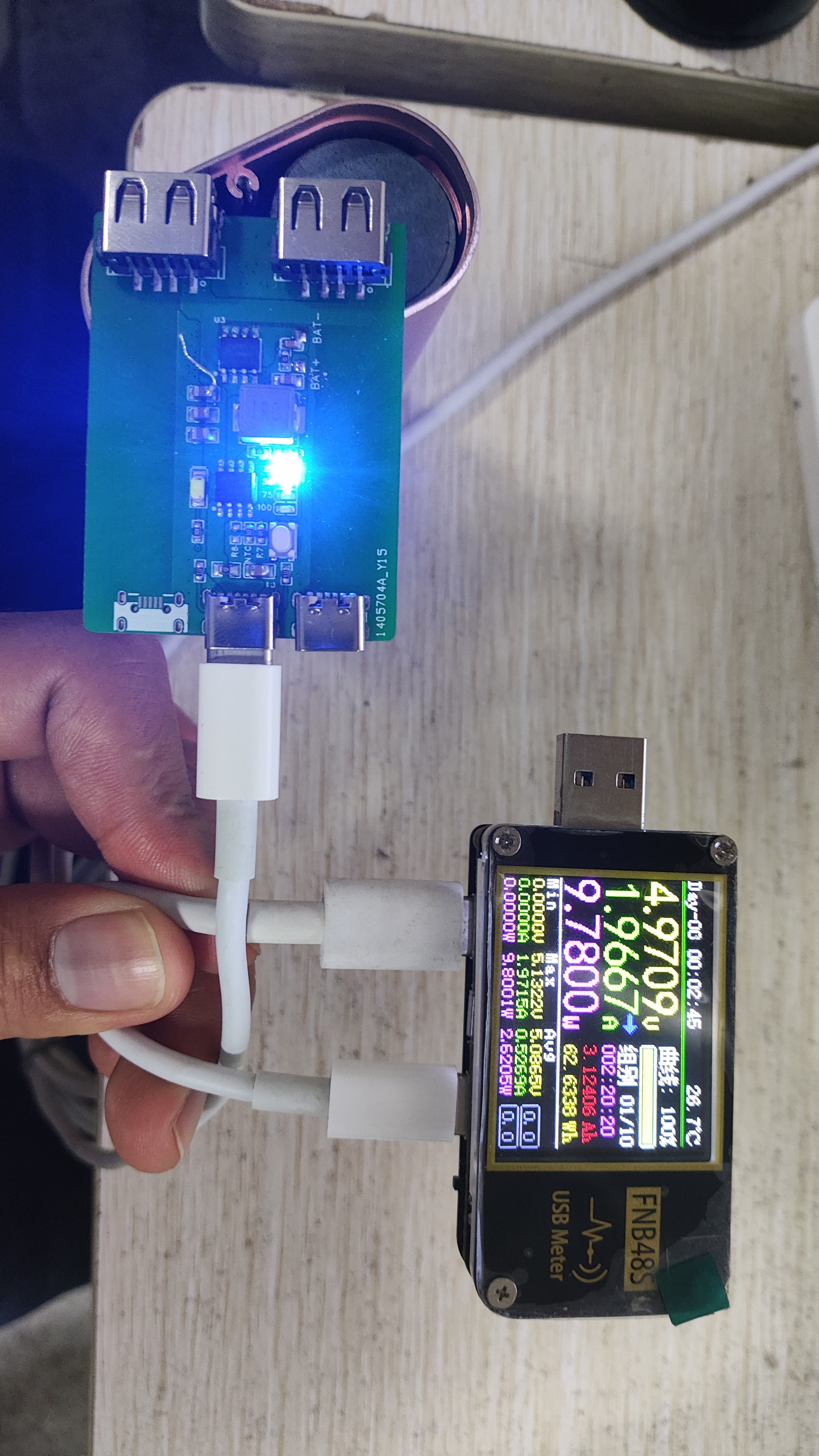
A slight inductor hissing sound occurs when connecting to the first detector (consider replacing with an inductor with a larger saturation current). The charging device is an iPad.
Based on CH340N, with 3.3V and 5V TTL level switching.
This is a homemade USB 2.0 docking station using an SL2.1A controller and a hub chip. Speeds reach standard USB 2.0 speeds, with read speeds around 40MB/s and write speeds around 30MB/s (when all four USB ports are plugged in).
Performance is stable.
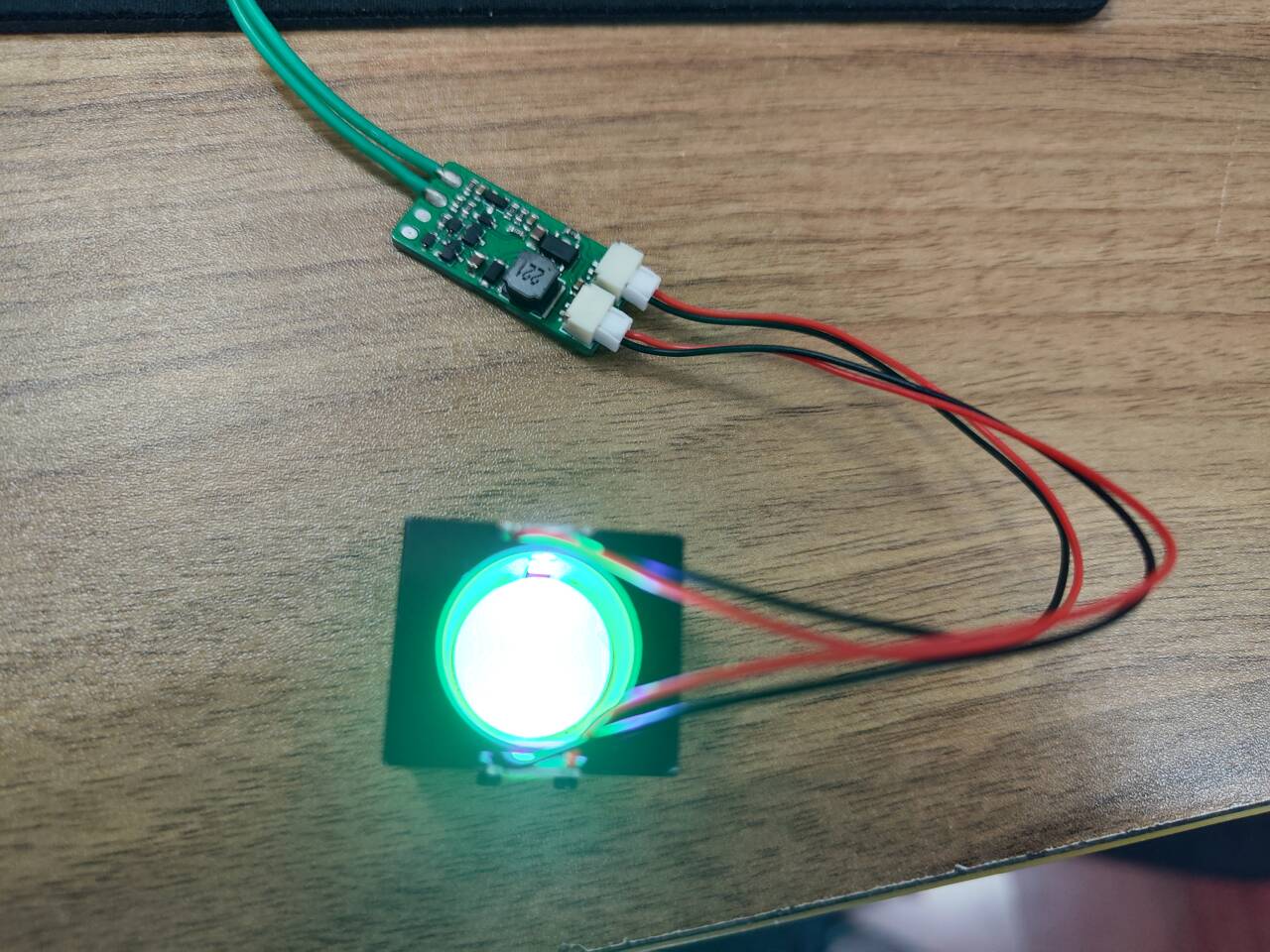
RoboMaster fluorescent charging module, fully compatible with official specifications.
RoboMaster fluorescent charging module, compatible with official specifications. Heat dissipation: If mounted on a CNC-machined metal part, a heat sink is not required; if mounted on a 3D-printed part, a heat sink is necessary. Please purchase or customize the heat sink yourself to ensure good heat dissipation for the light board.
PDF_RoboMaster Fluorescence Charging Module.zip
Altium_RoboMaster fluorescent charging module.zip
PADS_RoboMaster fluorescence charging module.zip
BOM_RoboMaster Fluorescence Charging Module.xlsx
97254
USB to 4-port serial TTL downloader with no cold start
USB to 4TTL downloader, cold start-free circuit
I. Product Introduction:
This USB-to-4-port serial programmer, built using CH344, has been tested and can download STC series microcontrollers, including the ESP32 microcontroller. For the ESP32 microcontroller, the factory mode of the official flash_download_tool allows simultaneous downloading to multiple devices.
II. Circuit Design
: The cold-start circuit uses a transistor and PMOS configuration. During programming, the RTS pin is pulled low, interrupting the 5V power supply for several hundred milliseconds. The circuit diagram uses 1uF pins (C1, C2, C3, C4), which is sufficient for programming STC microcontrollers. My actual prototype test circuit used 10uF, resulting in a longer 5V interruption time compared to 1uF.
III. Discussion
1. The programming interface can be modified according to your usage. If using 3.3V, add an AMS1117-3.3 to convert the power supply. CH344 supports 3.3V and 5V.
2. Programming ESP32 requires grounding GPIO00 to put the module in download mode. To ensure compatibility with STC microcontrollers, I did not directly implement the GPIO00 pin pull-down circuit on the programmer. You can modify it as needed.
3. The CH344's CFG pin, the manual says, can be set to enable or disable flow control. I have reserved the interface, but I don't know the specific usage. It seems there's no difference between CFG being grounded and floating. Discussion on the usage of CFG is welcome.
PDF_USB to 4-port Serial TTL Downloader - Cold Start-Free.zip
Altium_USB to 4-port Serial TTL Downloader - Cold Start-Free.zip
PADS_USB to 4-port Serial TTL Downloader - Cold Start-Free.zip
BOM_USB to 4-port Serial TTL Downloader - Cold Start-Free.xlsx
97257
Digital oscilloscope
Instrumentation Training Questions
This project utilizes analog circuit components such as resistor dividers, operational amplifiers, and comparators to implement signal conditioning, amplification, shifting, filtering, and comparison functions to adapt to the input and output range of the STM32H750's ADC and DAC, thus realizing the oscilloscope's sampling and output functions. It also uses switches and voltage divider networks to implement the segmentation function of analog input and output channels, improving the measurement accuracy and output resolution of small signals. Furthermore, it utilizes the STM32H750's timer function to implement triggering and frequency measurement functions.
Project Functions: This project can function as a dual-channel oscilloscope, measuring analog signals within a ±15V range and converting them into digital signals within a 0-3.3V range for sampling by the STM32H750's ADC. It can also function as a single-channel signal source, outputting analog signals within a ±10V range, which are then generated by the STM32H750's DAC. It can also square-wave the input signal and utilize comparators and timers to implement triggering and frequency measurement functions.
PDF_DigitalOscilloscope.zip
Altium Digital Oscilloscope.zip
PADS_DigitalOscilloscope.zip
BOM_DigitalOscilloscope.xlsx
97258
electronic
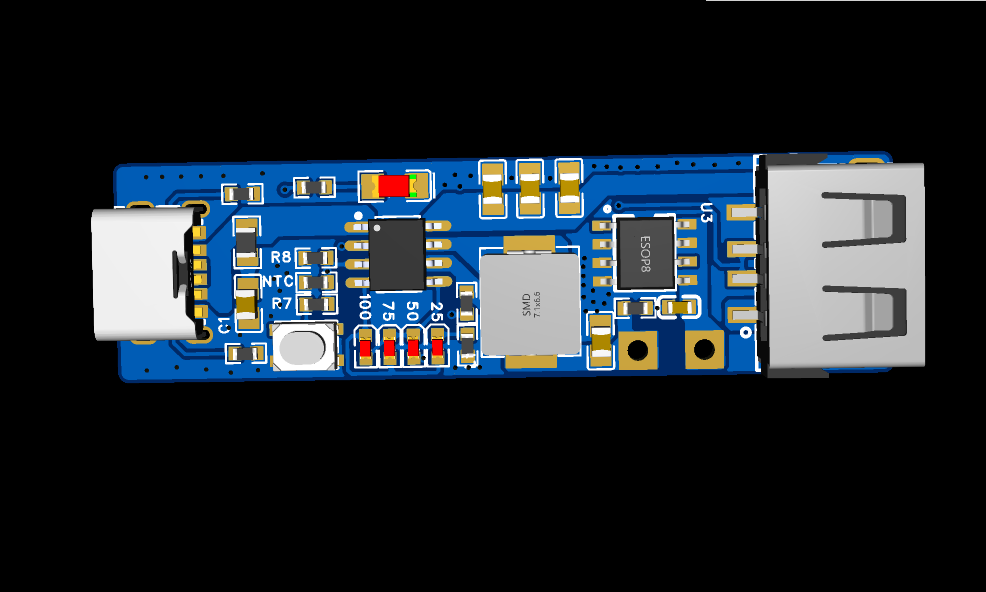 The IP5407 is a multi-functional power management SOC integrating a boost converter, lithium battery charging management, and battery level indicator, providing a complete power solution for power banks. Features
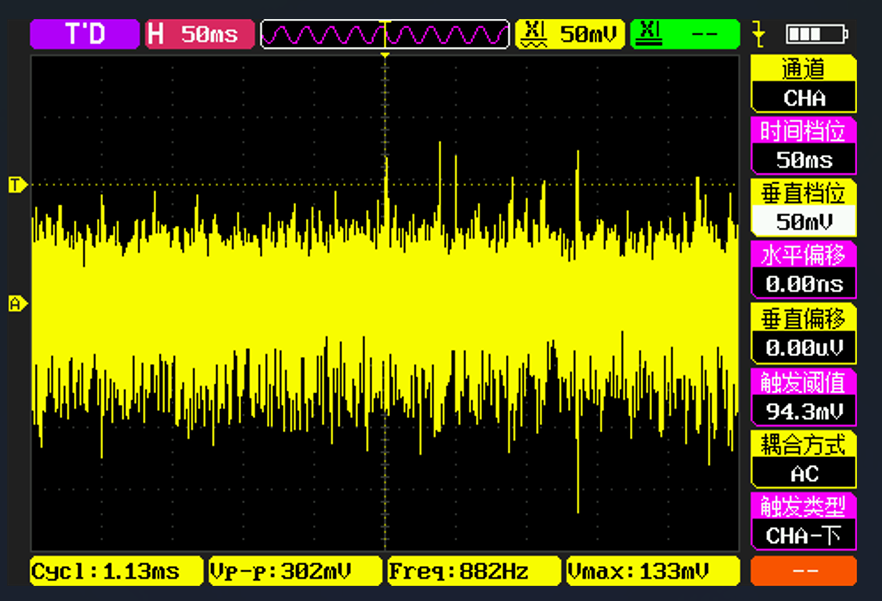
 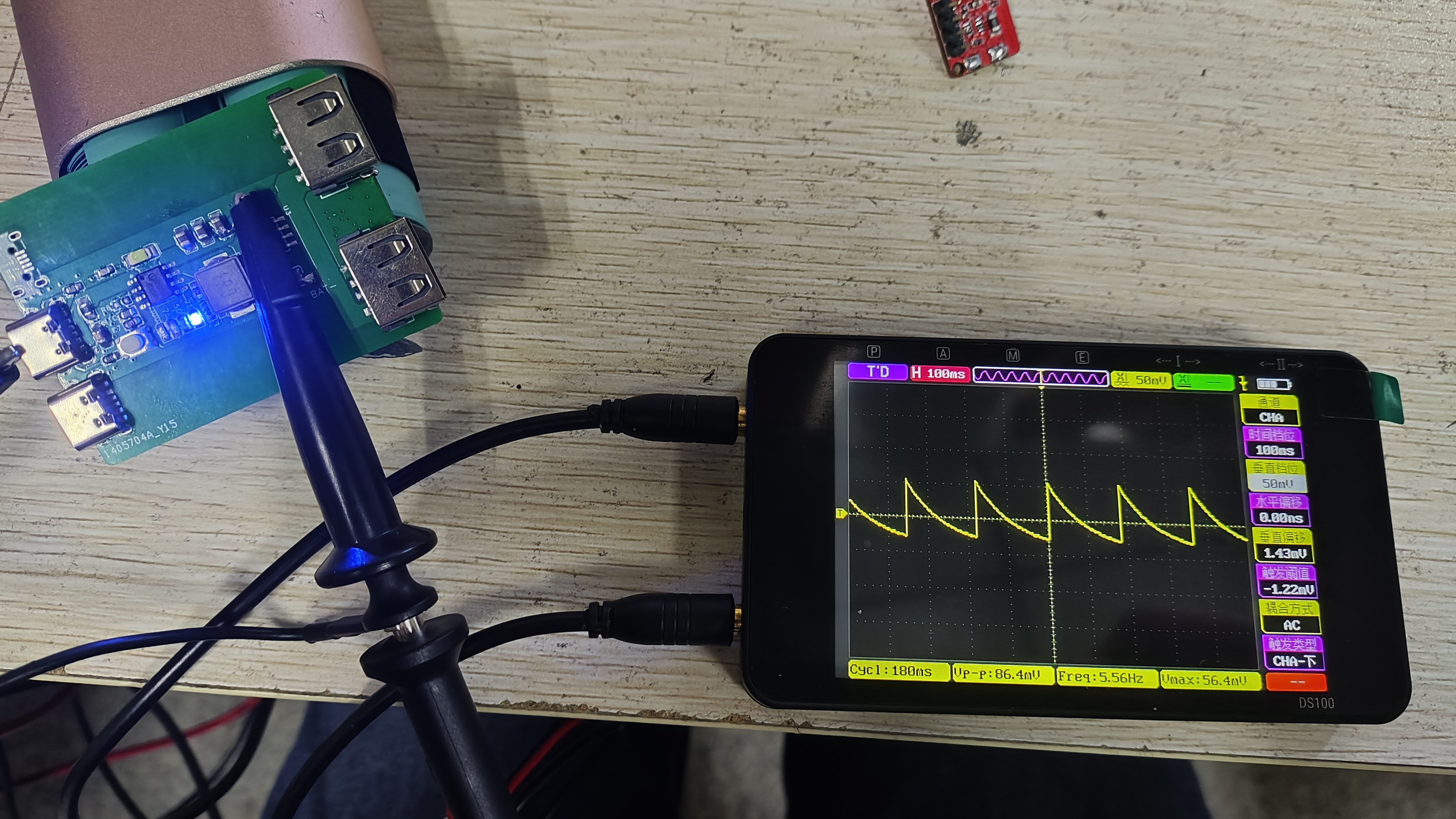 and loaded conditions ;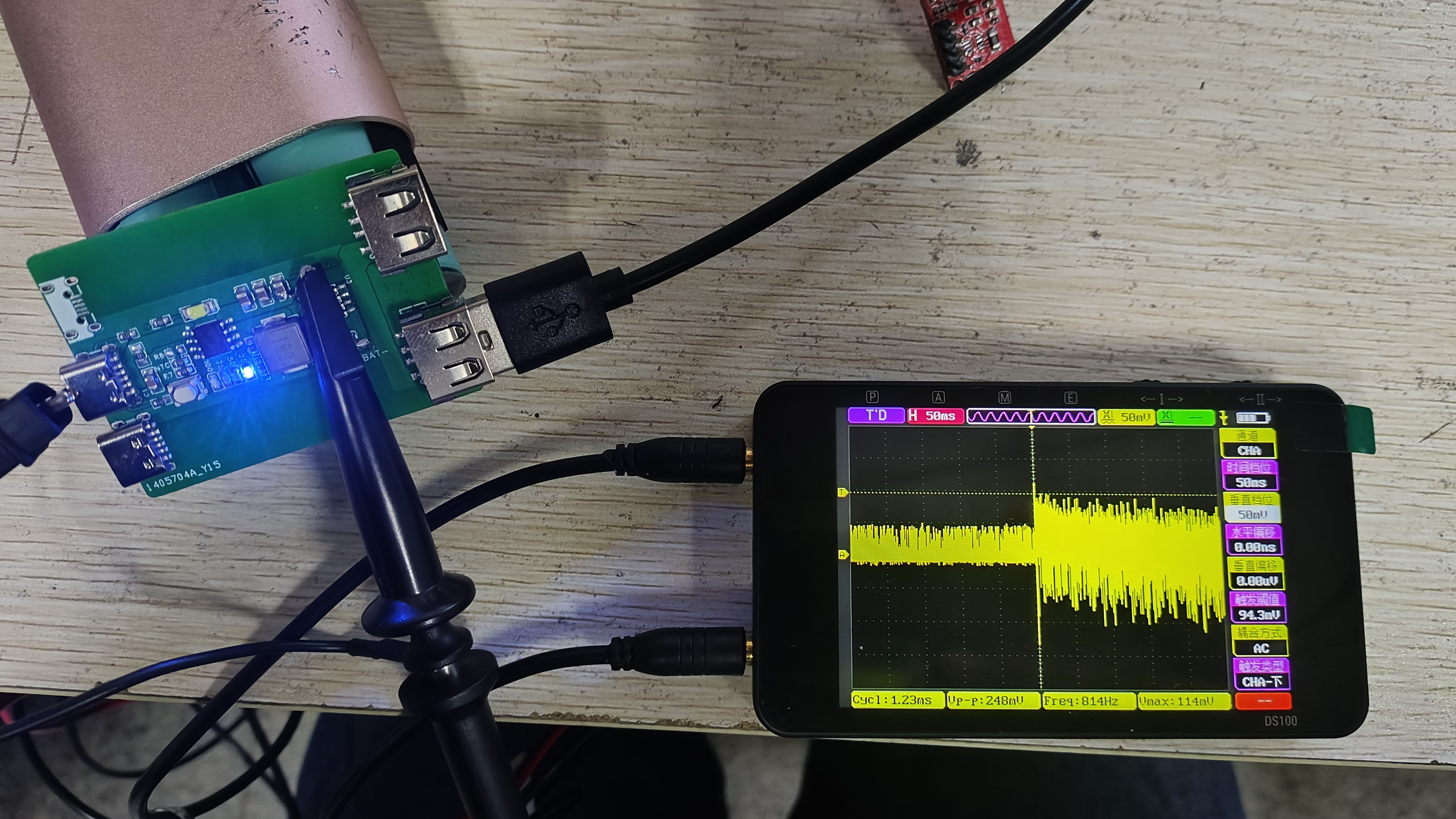
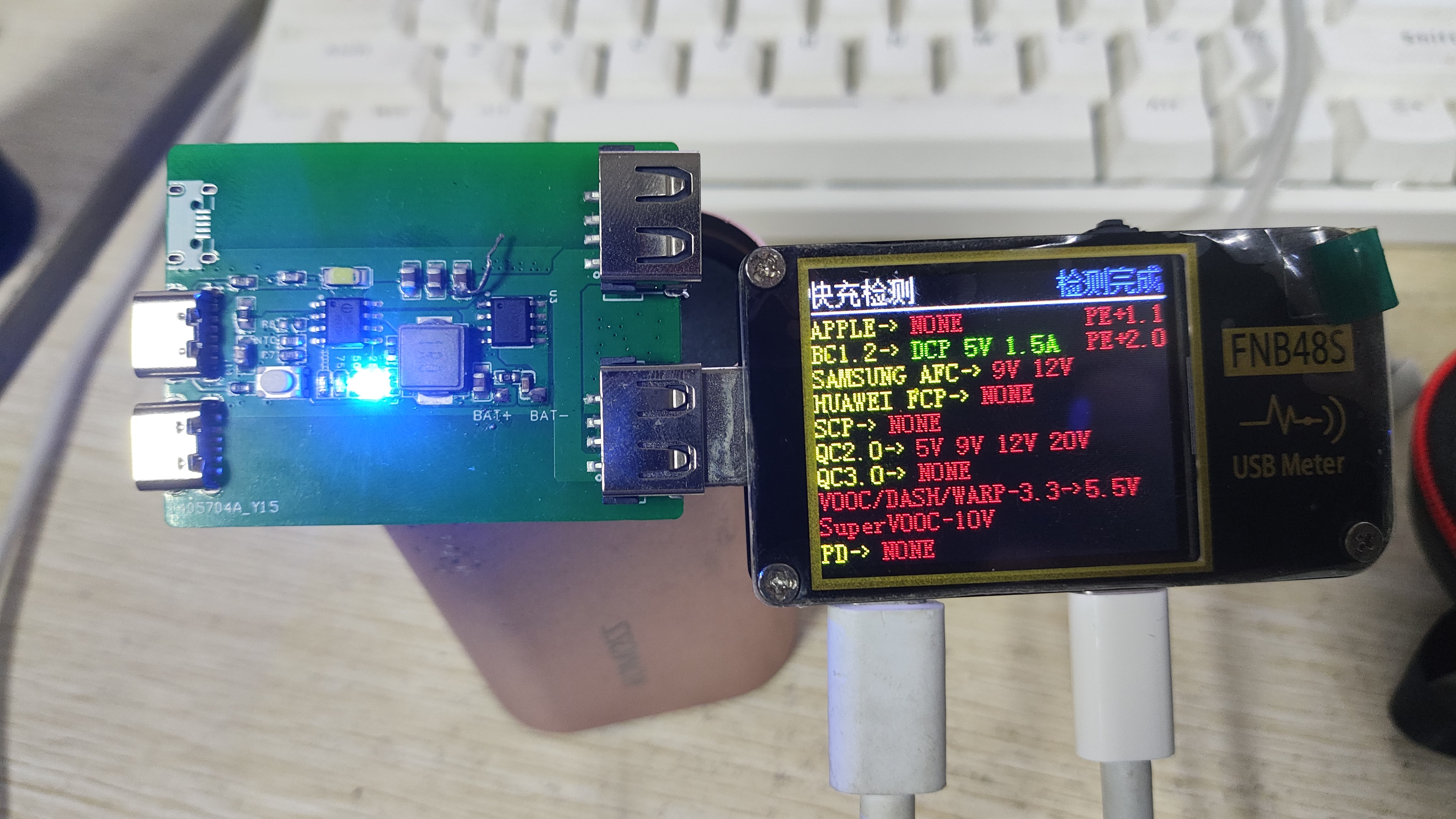
 protocol detection for
  charging
  and discharging.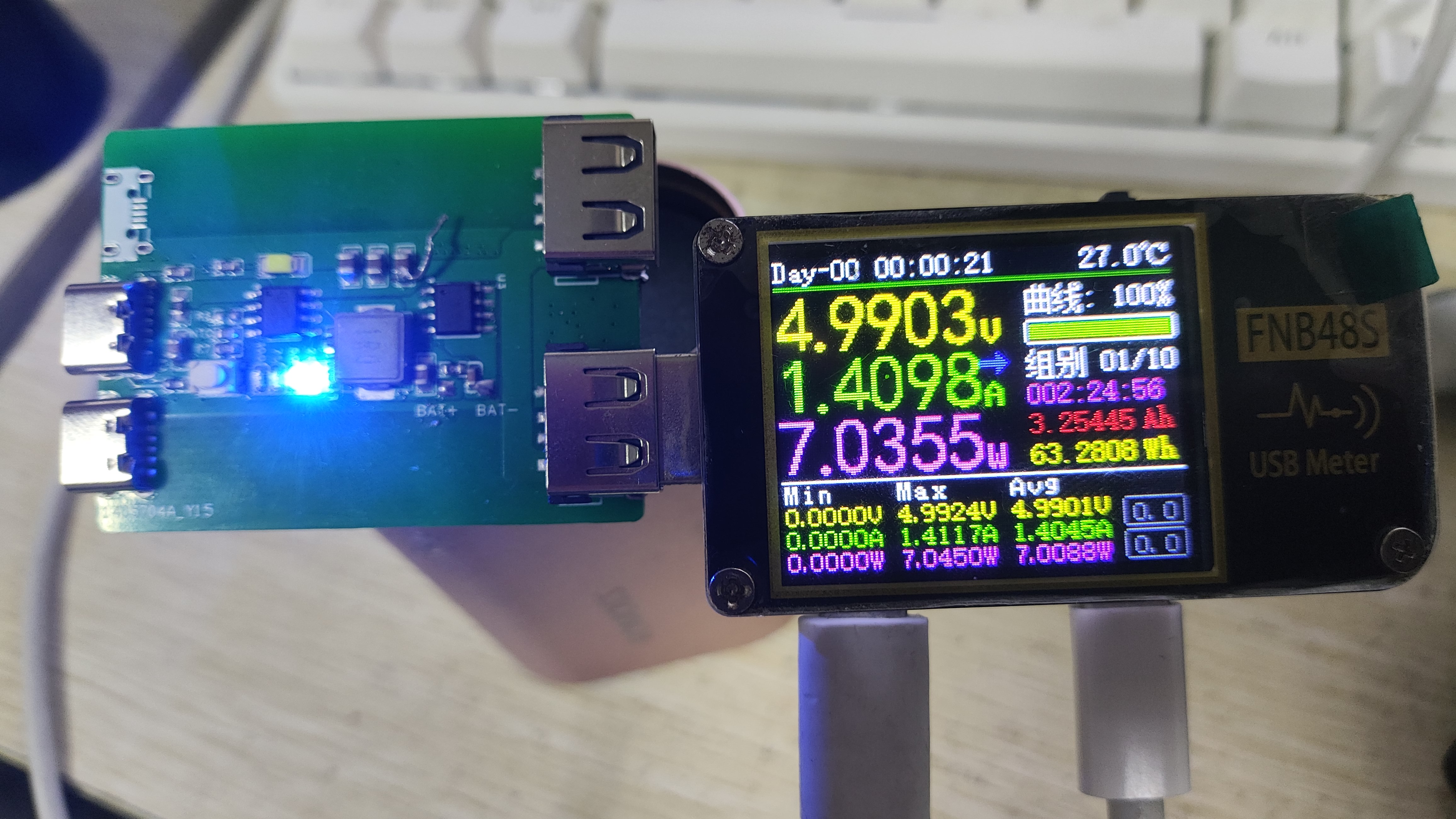








 京公网安备 11010802033920号


 AA1-B0-36-615-3G1-C